
Commercial real estate isn’t just fancy office buildings and shopping malls. It’s the backbone of how businesses operate-and how ordinary people build wealth without ever running a store or hiring employees. If you’ve ever walked past a strip mall, driven by a warehouse district, or sat in a coworking space, you’ve interacted with commercial real estate. But most people don’t realize how much money moves through it, or how accessible it is to regular investors.
What Exactly Is Commercial Real Estate?
Commercial real estate, or CRE, refers to any property used for business purposes. That includes:
- Office buildings - from single-tenant startups to high-rise corporate campuses
- Retail spaces - malls, standalone stores, grocery-anchored centers
- Industrial properties - warehouses, distribution centers, light manufacturing
- Multi-family rentals (5+ units) - apartment buildings with five or more units are legally classified as commercial
- Specialty properties - hotels, medical offices, self-storage facilities, data centers
It’s not residential. A four-unit apartment building? That’s residential. A five-unit? Now it’s commercial. The line matters because financing, taxes, and regulations change completely at that threshold.
In 2025, the U.S. commercial real estate market was valued at over $18 trillion. That’s more than the entire GDP of Germany. And while big firms like Blackstone and Brookfield dominate headlines, over 60% of CRE assets are owned by individuals, small partnerships, or local investors.
How Do People Make Money From Commercial Real Estate?
There are two main ways: cash flow and appreciation.
Cash flow comes from rent. A well-located industrial warehouse in Dallas might bring in $15 per square foot annually. If you own 20,000 square feet, that’s $300,000 a year in gross income. After property taxes, insurance, maintenance, and management fees, you might net $200,000. That’s not a bad return for a property you bought for $3 million.
Appreciation happens when demand rises. Look at Austin. In 2020, a Class B office building in the North Loop sold for $180 per square foot. By 2025, the same building sold for $310. Why? Tech companies moved in. Remote work faded. Companies needed real offices again. The value didn’t just go up-it doubled.
Unlike stocks, commercial properties don’t swing wildly day to day. They move slowly. That’s why they’re called "slow money." But over five to ten years, they often outperform the S&P 500.
Where Should You Look in 2026?
Not all commercial real estate is created equal. Some sectors are growing. Others are shrinking.
Industrial is still king. E-commerce isn’t slowing down. Amazon, Walmart, and smaller retailers need more warehouses. Cities like Columbus, Ohio; Memphis, Tennessee; and Riverside, California are seeing record leasing activity. Rents in these markets have risen 12-18% annually since 2022.
Office space is adapting. The old model-100,000 square feet of empty desks-is dead. But flexible office spaces with private rooms, meeting pods, and on-site cafés? Those are thriving. WeWork’s decline didn’t kill coworking. It killed bad coworking. Now, companies like Industrious and Knotel are signing long-term leases with Fortune 500 clients.
Retail is selective. Big malls? Struggling. But neighborhood grocery-anchored centers? Booming. People still need to buy milk, pick up prescriptions, and get their hair cut. Properties with essential tenants-pharmacies, dollar stores, dental clinics-have vacancy rates under 5% nationwide.
Self-storage is underrated. It’s not glamorous, but it’s simple. Tenants pay monthly. Turnover is low. Operating costs are minimal. A 50,000-square-foot facility in Phoenix can generate $1.2 million in annual revenue with just three employees.

How Do You Get Started With ,000?
You don’t need millions. Here are three realistic paths for beginners:
- REITs (Real Estate Investment Trusts) - Buy shares in publicly traded companies that own commercial properties. Think of it like buying stock in a portfolio of warehouses and offices. REITs pay dividends and require as little as $100 to start. Examples: Prologis (industrial), Simon Property Group (retail), or Equinix (data centers).
- Real estate crowdfunding - Platforms like Fundrise or RealtyMogul let you pool money with others to buy properties. You might invest $5,000 in a warehouse in Atlanta and earn 8-10% annual returns. You’re not the owner-you’re a partial investor. But you get the upside without managing tenants.
- Small multi-family (5-10 units) - Buy a duplex or triplex in a growing suburb. Live in one unit, rent out the others. Use an FHA loan to put down just 3.5%. In Austin, a 6-unit building bought for $950,000 in 2023 now rents for $5,200 a month. After expenses, that’s $3,100 monthly cash flow. That’s over $37,000 a year in passive income.
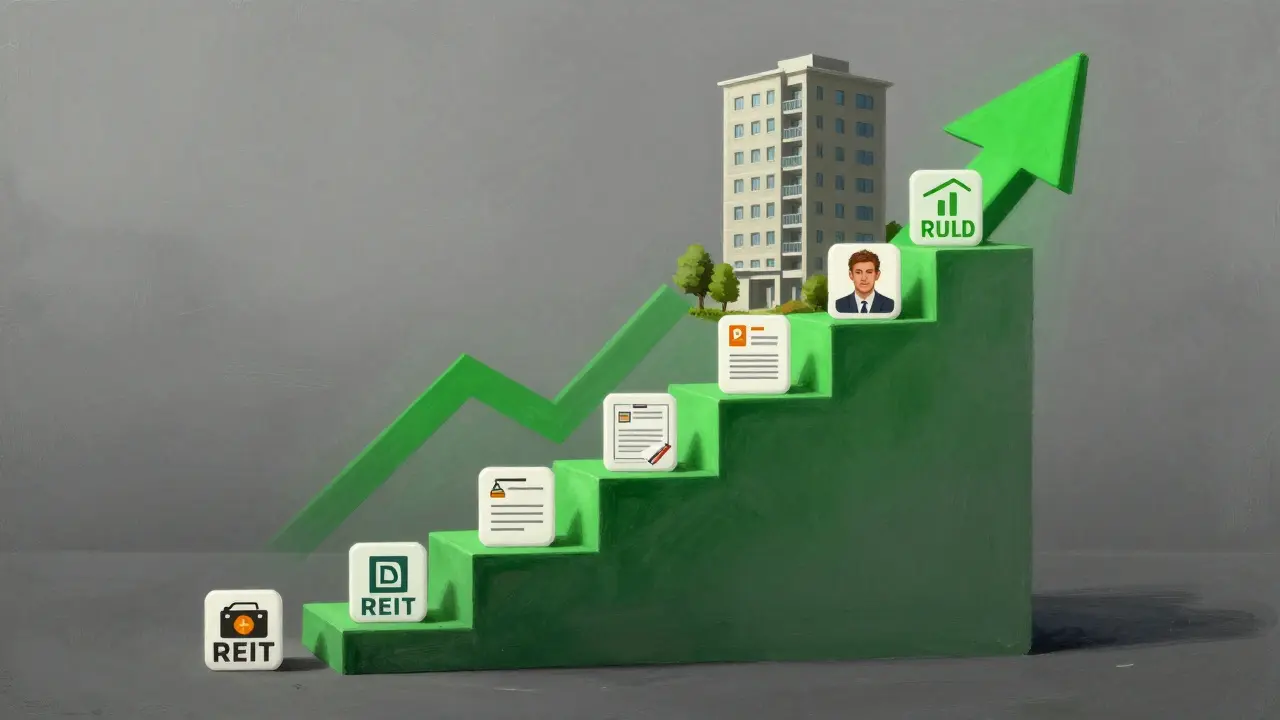
Many people start with REITs. Then they move to crowdfunding. Then they buy their first property. It’s a ladder. You don’t need to jump to the top.
What Are the Biggest Mistakes?
Most people lose money in commercial real estate not because the market crashes-but because they skip the basics.
- Not checking tenant credit - A retail tenant with a history of bankruptcy won’t pay rent when things get tough. Always run a credit check and ask for financial statements.
- Ignoring cap rates - The capitalization rate (net operating income divided by purchase price) tells you the true return. A property advertised at 6% cap rate might be a scam if the seller hid $100,000 in deferred maintenance.
- Over-leveraging - Taking out a 90% loan on a property with unstable tenants is a recipe for foreclosure. Keep debt under 65% of value.
- Thinking it’s passive - Commercial tenants need attention. Leases expire. Maintenance happens. You need a good property manager-or you’ll burn out.
The best investors don’t chase hot markets. They find undervalued assets in stable areas with strong job growth. They read leases. They visit properties in person. They talk to local brokers.
How Do You Know If It’s Right for You?
Ask yourself:
- Do you want steady income or big, quick profits?
- Are you okay with locking up money for 5-10 years?
- Can you handle occasional tenant issues or repairs?
- Do you understand basic financial terms like NOI, cap rate, and cash-on-cash return?
If you said yes to most of those, you’re ready. If you’re looking for a get-rich-quick scheme, walk away. Commercial real estate rewards patience, research, and discipline.
It’s not glamorous. But in 2026, it’s one of the most reliable ways to build lasting wealth outside of a 9-to-5 job.
Is commercial real estate a good investment in 2026?
Yes, but only if you pick the right type and location. Industrial, self-storage, and essential retail are strong. Office space is recovering slowly. Avoid overpriced markets with low job growth. Focus on properties with long-term leases and creditworthy tenants.
How much money do I need to invest in commercial real estate?
You can start with as little as $500 in a REIT or $5,000 through crowdfunding. To buy a small property like a 6-unit apartment building, you’ll need $100,000-$200,000 for a down payment. Larger warehouses or office buildings typically require $500,000 or more.
What’s the difference between commercial and residential real estate?
Commercial properties are leased to businesses, not individuals. Leases are longer (3-10 years), rents are higher, and tenants often pay for maintenance and taxes. Residential properties have shorter leases (1 year), stricter tenant laws, and more frequent turnover. Financing is also different-commercial loans require larger down payments and higher credit scores.
Can I invest in commercial real estate without managing it myself?
Absolutely. You can invest through REITs, crowdfunding platforms, or syndications where a professional team handles everything. You just provide the capital and get a share of the returns. This is how most institutional investors operate.
Are there tax benefits to owning commercial real estate?
Yes. You can deduct mortgage interest, property taxes, insurance, repairs, depreciation, and management fees. Depreciation alone can reduce your taxable income by tens of thousands of dollars a year, even if the property is making money. Consult a CPA who specializes in real estate to maximize these benefits.
Next Steps
Start small. Open an account with Fundrise or REITs like Prologis. Read one commercial lease template online. Talk to a local commercial broker-most will give you a free 30-minute consultation. Don’t rush into buying. Learn first.
Commercial real estate isn’t for everyone. But for those who take the time to understand it, it’s one of the most powerful tools for building long-term financial freedom.
15 Responses
Let’s be real - if you think CRE is just about buying buildings and collecting rent, you’ve been living under a rock. The real game is in the leases. A 10-year triple-net lease with a Fortune 500 tenant? That’s a bond with walls. And don’t get me started on how cap rates are being manipulated by brokers who’ve never stepped foot in a warehouse. You think you’re getting a 7% yield? More like 3.5% after hidden maintenance bombs. And don’t even mention ‘affordable industrial’ - those prices in Columbus are now higher than my ex’s emotional baggage.
Commercial real estate isn’t just an asset class - it’s a mirror. It reflects our collective hunger for stability in a world that’s spinning faster than a Bollywood dance number. We chase bricks and mortar because we’re terrified of volatility - of algorithms, of layoffs, of AI eating our jobs. But here’s the truth: the buildings don’t care if you’re rich or broke. They just sit there. Waiting. Watching. Holding space for dreams that never asked permission to exist.
While the article presents a generally accurate overview of commercial real estate trends, I would caution readers against underestimating the regulatory risks in certain states. Property tax reassessments following reappraisals, especially in high-growth areas like Austin and Phoenix, have significantly impacted net yields. Additionally, zoning changes in response to climate resilience mandates may affect industrial property viability in flood-prone zones. Due diligence remains non-negotiable.
lol so you're telling me a 6 unit building in austin is cash flowing 3k/mo? bro the property tax just went up 47% last year and the roof leaked so bad the tenant sued for mold. also who the hell still believes in 'essential retail'? the dollar store across from me got boarded up last month. and don't even get me started on the fed hiking rates again next quarter - this whole thing is a ponzi built on zillow fantasy pricing. i've seen 3 'sure thing' deals go belly up in 2 years. you're not investing, you're gambling with your life savings.
Wait, so I can invest $5k and get 8-10% returns? That sounds too good to be true. Are you sure the platform isn’t just taking my money and flying to Bali? Also, how do I even know if the warehouse in Atlanta is real? Like, do they send me photos? Or do I just trust some guy named Chad who says it’s ‘prime logistics real estate’? I just want to know if my $5k is gonna vanish like my last Tinder date.
I appreciate the breakdown - especially the part about industrial being resilient. I’ve been watching the logistics boom in Tamil Nadu and it’s fascinating how similar the patterns are to what’s happening here. The key is patience. Don’t rush. Learn the language of leases. Talk to local property managers. Real wealth isn’t built overnight - it’s built one tenant, one inspection, one drywall repair at a time.
Oh, so now REITs are ‘beginner-friendly’? You mean the same REITs that cut dividends in 2022 when interest rates rose? And ‘crowdfunding’? That’s just a fancy word for ‘give your money to strangers who don’t even know your name.’ And don’t even get me started on the ‘3.5% down FHA loan’ fantasy - have you seen the insurance premiums on multi-family in Texas? They’re higher than my student loan payments. This article reads like a broker’s LinkedIn post written by someone who’s never signed a lease. The only thing ‘accessible’ here is the scam.
Great breakdown. Just one thing to clarify: when you mention cap rates, make sure you're using net operating income (NOI) after ALL expenses - including vacancy allowances. Too many people use gross income and get fooled. Also, if you're new, start with reading a sample triple-net lease. Understand who pays for roof repairs, property taxes, and insurance. That’s where most beginners get burned. And yes - talk to a local broker. Most will sit down with you for coffee. No pitch. Just advice.
Let me tell you something - this isn’t about money. It’s about freedom. Every dollar you put into a warehouse or a self-storage facility isn’t just an investment - it’s a middle finger to the 9-to-5 grind. You’re not buying bricks. You’re buying time. Time to wake up without an alarm. Time to travel. Time to breathe. The market will swing. The economy will glitch. But a property with long-term tenants? That’s your anchor. And you? You’re the captain now. Go claim your seas.
They don’t want you to know this but CRE is just a front for the deep state to control the economy. Watch how every time the Fed raises rates, the ‘industrial boom’ pops up in exactly 3 states. Coincidence? No. The same people who own the Fed own the warehouses. The same people who own the banks own the REITs. They want you to think you’re investing - but you’re just feeding the machine. And don’t get me started on data centers - those are surveillance hubs disguised as tech hubs. Wake up.
Minor typo in the article: ‘How Do You Get Started With ,000?’ - that comma before the zeros is a glitch. Also, ‘self-storage is underrated’ - yes, but the insurance rates are insane in California. Just saying. And if you’re new, please read the lease before signing. I once had a tenant sign a 5-year lease… then tried to pay rent in Bitcoin. It was a mess.
Coming from India, I’ve seen how commercial real estate works differently here. Tenants don’t always pay on time. Paperwork is a nightmare. But the core idea is the same - long-term income through assets. I started with a small retail shop in Pune. No fancy platforms. Just a handshake and a ledger. It’s not glamorous, but it’s real. And it pays. Don’t overcomplicate it.
People act like commercial real estate is this elite club you need millions to join. Bullshit. I bought a 6-unit in a suburb of Hyderabad with $120k. Lived in one unit. Rented the rest. Made more than my salary. Now I’m looking at a self-storage facility. The key? Start small. Learn fast. Don’t wait for perfect. Perfect is the enemy of progress. And yes - it’s hard. But so is working 60 hours a week for someone else’s dream. Choose your battle.
Just wanted to say thank you for this. I’m 24, just started my first job, and this actually made me feel like I have a shot. I don’t need to wait until I’m 40. I can start with $100 in a REIT today. That feels powerful. Not flashy. Not loud. But real. And that’s enough for now.
Industrial’s hot. Got it. But what about all the empty warehouses in Ohio? I drove through one last month. 12 of them. All boarded up. People think it’s booming, but half the ‘growth’ is just paper deals. Don’t believe the hype. Just watch.