
When you’re buying, selling, or even just wondering what your home in Nagpur is worth, you’re not guessing. There’s a process behind that number - a real estate appraisal. It’s not a quick estimate from a neighbor or a random online calculator. It’s a formal, documented evaluation done by trained professionals who know the local market inside out. In Nagpur, where neighborhoods like Sitabuldi, Kasturba Nagar, and Khapri are growing fast, getting an accurate appraisal isn’t optional - it’s essential.
What Exactly Is a Real Estate Appraisal in Nagpur?
A real estate appraisal in Nagpur is a detailed report that estimates the market value of a property. It’s based on physical inspection, recent sales of similar homes nearby, location factors, and legal documentation. The appraiser doesn’t just look at the number of rooms or the color of the walls. They check the foundation, roof condition, plumbing, electrical systems, and even the quality of construction materials used.
Unlike a real estate agent’s opinion of value, an appraisal is objective. It follows guidelines set by the Reserve Bank of India and the Maharashtra Real Estate Regulatory Authority (MahaRERA). Banks require appraisals before approving home loans. The government uses them for property tax calculations. Courts rely on them during disputes. So if you’re doing anything serious with a property in Nagpur, you’ll need one.
How Do Appraisers Determine Value in Nagpur?
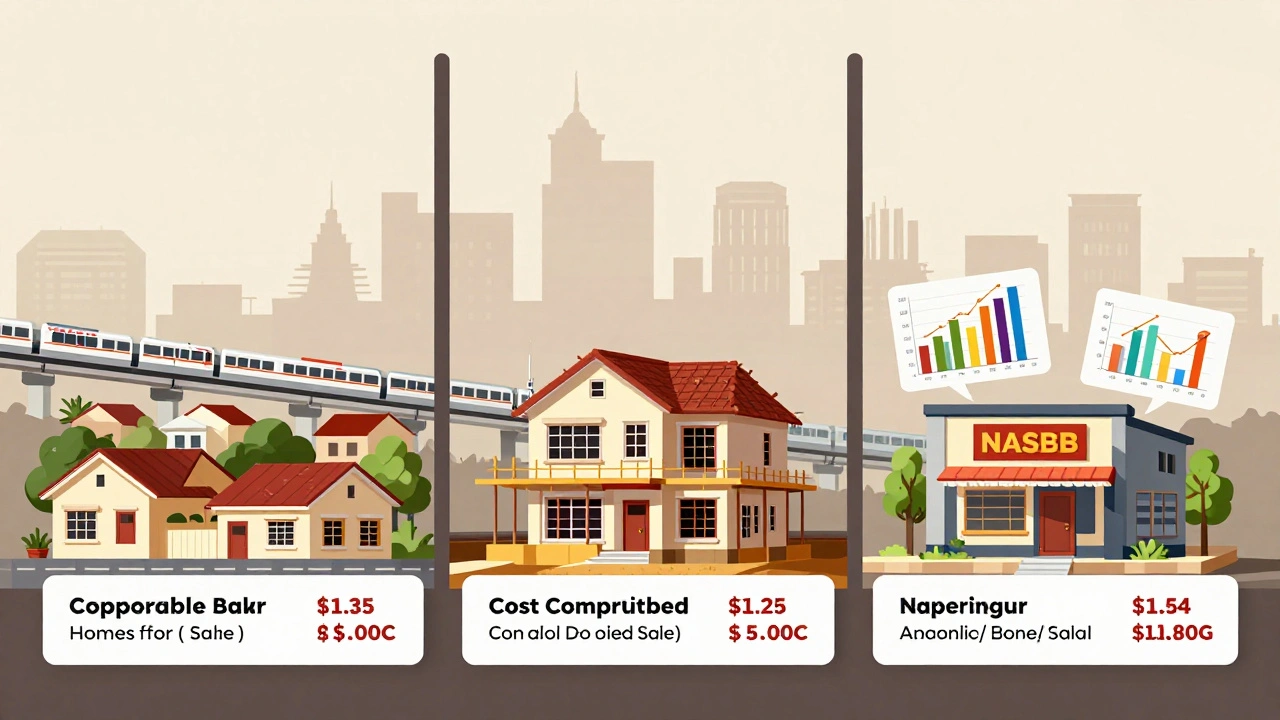
Appraisers in Nagpur use three main methods - and they don’t pick just one. They combine them to get the most accurate picture.
- Sales Comparison Approach: This is the most common. The appraiser finds 3-5 recently sold homes in the same area that are similar in size, age, and features. If a 3-bedroom flat in Kasturba Nagar sold for ₹75 lakh last month, and yours is nearly identical, that’s your starting point. Adjustments are made for differences - like a newer kitchen or a balcony facing the wrong direction.
- Cost Approach: Used mostly for new constructions or unique properties. The appraiser calculates how much it would cost to rebuild your house from scratch today, then subtracts depreciation. For example, if building a similar house costs ₹90 lakh but yours is 12 years old and has worn-out flooring, they might deduct ₹15 lakh for wear and tear.
- Income Approach: Applies to rental properties. If you own a shop in Sitabuldi that brings in ₹40,000 a month in rent, the appraiser uses local capitalization rates (usually 6-8% in Nagpur) to estimate its value. Multiply the annual rent by 12, then divide by the cap rate. That gives you a value range.
These numbers are cross-checked. If the sales comparison says ₹80 lakh, the cost approach says ₹82 lakh, and the income approach says ₹78 lakh, the final value settles around ₹80 lakh. It’s not magic - it’s math, backed by data.
What Factors Affect Property Value in Nagpur?
Location isn’t just about which area you’re in - it’s about what’s around you. Here’s what really moves the needle in Nagpur:
- Proximity to transport: Properties within 1 km of the Nagpur Metro stations (like Sitabuldi or Khapri) sell for 15-20% more than those 3 km away.
- Schools and hospitals: A home near Symbiosis School or Gandhi Hospital can command a premium. Families pay more for convenience.
- Infrastructure projects: The Nagpur-Indore Expressway and the upcoming ring road have already boosted values in areas like Kalmeshwar and Kamptee. Buyers now look 5-10 km outside the city center.
- Legal status: If your property doesn’t have a clear title or isn’t registered under MahaRERA, its value drops by 25-30%. Banks won’t lend on unapproved projects.
- Market seasonality: Property demand in Nagpur peaks between August and November. Appraisals done in June might show lower values than those done in October, even for the same house.
Even small things matter. A property with a good water supply, no pending legal cases, and proper parking space can be worth ₹5-10 lakh more than an identical one without them.
Who Can Do a Real Estate Appraisal in Nagpur?
Not just anyone. In India, only registered valuers can legally perform real estate appraisals for bank loans or legal purposes. These are professionals certified by the Institute of Valuers under the Ministry of Corporate Affairs.
You’ll find them working with banks like SBI, HDFC, or ICICI, or independently as consultants. Some real estate agents offer valuations, but those aren’t official unless they’re also registered valuers. Always ask for their registration number and verify it on the Institute of Valuers’ website.
Appraisers in Nagpur typically charge between ₹2,000 and ₹8,000 depending on property size and complexity. A 2BHK flat in a gated community might cost ₹3,500. A 5,000 sq. ft. farmhouse in Ramdaspeth could be ₹7,000. Don’t go for the cheapest option - accuracy matters more than price.
How Long Does an Appraisal Take in Nagpur?
Most appraisals are done in 2-5 days. The site visit takes 30-60 minutes. Then the appraiser spends time analyzing sales data, checking municipal records, and writing the report. Banks usually require the report within 72 hours of loan application.
If you’re in a hurry, some firms offer express service for an extra fee - 48-hour turnaround. But if the report is rushed, errors creep in. A wrong square footage or a missed legal issue can delay your loan or cost you money later.
What Happens If the Appraisal Comes In Low?
This happens more often than people think. If your home is listed for ₹90 lakh but the appraisal comes in at ₹80 lakh, the bank will only lend up to 80% of ₹80 lakh - ₹64 lakh. You’ll need to cover the rest yourself, or the deal might fall through.
Here’s what you can do:
- Review the report. Did the appraiser miss recent sales in your lane? Did they use outdated data? Sometimes, a simple correction fixes it.
- Request a reconsideration of value. Submit evidence - photos, sale listings of similar homes, renovation receipts. Many appraisers will adjust if you provide clear proof.
- Get a second appraisal. It costs more, but if two appraisers agree on a higher value, the bank will usually accept it.
- Negotiate with the buyer. Lower the price to match the appraisal. It’s better than losing the sale.
Don’t ignore a low appraisal. It’s not a personal attack - it’s a market signal. The property might be overpriced, or the neighborhood’s value has shifted.

Why Appraisals Matter More in Nagpur Now
Nagpur’s real estate market has changed fast. In 2020, a 2BHK in Sitabuldi averaged ₹60 lakh. Today, it’s ₹85-95 lakh. New layouts, metro connectivity, and IT parks like the Nagpur Smart City project have pushed prices up. But not all areas rose equally.
Without an appraisal, you’re flying blind. Buyers risk overpaying. Sellers risk leaving money on the table. Lenders risk bad loans. The government risks unfair property taxes.
Appraisals bring transparency. They prevent fraud. They protect your investment. In a city where land is scarce and demand is high, knowing your property’s true value isn’t just smart - it’s necessary.
Common Mistakes People Make
- Believing the agent’s estimate is enough. Agents want to close deals. Appraisers want to be accurate.
- Skipping the appraisal to save money. That ₹5,000 fee could save you ₹10 lakh if you avoid a bad deal.
- Using last year’s appraisal. Property values change fast. A report older than 6 months is outdated in Nagpur’s market.
- Not checking the appraiser’s credentials. Unregistered valuers have no legal standing. Their reports can be rejected by banks or courts.
Don’t treat appraisal like a formality. Treat it like insurance for your biggest asset.
How to Prepare for an Appraisal
Make it easy for the appraiser. Do this before they arrive:
- Clear clutter. A messy house looks smaller. Clean and declutter.
- Fix obvious issues. Leaky faucets, broken tiles, or flickering lights raise red flags.
- Have documents ready: Title deed, property tax receipts, approved building plans, renovation invoices.
- Point out upgrades: New windows, solar panels, or a renovated bathroom can add value.
- Know your neighborhood. Mention recent sales you’ve seen or new developments nearby.
The more information you give, the more accurate the appraisal.
| Method | Best For | Accuracy in Nagpur | Time Required |
|---|---|---|---|
| Sales Comparison | Residential homes, apartments | High (if recent sales data is available) | 2-3 days |
| Cost Approach | New constructions, unique properties | Moderate (depends on construction cost data) | 3-5 days |
| Income Approach | Rental shops, commercial spaces | High (if rental records are verified) | 3-4 days |
Is real estate appraisal mandatory in Nagpur?
Yes, for bank loans, property tax reassessments, and legal disputes. Even if not legally required, it’s strongly advised for any serious transaction. Banks won’t approve home loans without one.
Can I use an appraisal from another city in Nagpur?
No. Appraisals are location-specific. Market conditions in Pune or Bhopal don’t apply to Nagpur. Even neighborhoods within Nagpur - like Khapri versus Ramdaspeth - have different values. Always get a local appraisal.
How often should I get my property appraised?
Every 2-3 years, or before selling, refinancing, or disputing property tax. Nagpur’s market changes fast. A 2023 appraisal may not reflect 2025 values, especially near metro stations or new infrastructure projects.
Do old buildings get lower appraisals?
Not necessarily. A well-maintained 30-year-old house in Kasturba Nagar can be worth more than a poorly built new one in a remote area. Condition matters more than age. Structural integrity, plumbing, and electrical systems are what appraisers focus on.
Can I challenge a low appraisal?
Yes. Submit evidence - recent sales of similar homes, renovation receipts, or photos of upgrades. Ask for a reconsideration. If the appraiser still stands by the low value, get a second opinion. Banks usually accept the higher of two appraisals.
9 Responses
Yo, this is actually one of the most thorough breakdowns I’ve seen on Nagpur’s market. The sales comparison vs. cost approach breakdown? Chef’s kiss. I’ve seen appraisals in Austin that didn’t even touch on infrastructure impact like the ring road. Nagpur’s moving faster than people realize - and this doc proves it.
Thank you for this exceptionally well-researched and meticulously organized exposition on real estate appraisal methodology within the Nagpur metropolitan context. The alignment of regulatory frameworks with market dynamics is both commendable and instructive. One must emphasize the critical importance of MahaRERA compliance, as it serves not merely as a bureaucratic formality but as a foundational pillar of market integrity.
bro why u even need an appraiser 😭 i sold my flat in khapri for 85L without one n the buyer cried when he saw the receipt lmao. also who cares about mahrera? my uncle’s place is 20 yrs old but has AC in every room n the appraiser said ‘nice’ n gave 80L. also why so many words?? 😴
Wait so if your house has a leaky faucet, it loses money?? That’s insane. I have a dripping sink and my cousin says it’s fine. Also, why do you need papers? Just show the appraiser the house. And why do they charge so much? My neighbor in Florida got one for $50. Are they just stealing? 😡
Okay but let’s be real - this whole appraisal system is just a front for the banks to control the market. They set the cap rates, they pick the ‘approved’ valuers, and if your property’s value doesn’t match their profit margin? Poof. Gone. I’ve seen it. They’ll downgrade a 10-year-old flat in Sitabuldi just because the appraiser got a kickback from a new condo developer. It’s not math - it’s manipulation. And don’t get me started on MahaRERA - that’s just a fancy stamp on a corrupt system.
I must point out, with the utmost urgency and precision, that the original post contains a grammatical error in the sentence: 'They check the foundation, roof condition, plumbing, electrical systems, and even the quality of construction materials used.' The phrase 'roof condition' lacks parallel structure - it should be 'the condition of the roof' to match the other noun phrases. Additionally, the use of '₹' without a space before the number is non-standard in formal English typography. This undermines the credibility of the entire document. Also, the word 'nearly' in 'yours is nearly identical' is vague and imprecise - how nearly? 95%? 98%? This ambiguity could lead to disastrous financial consequences for uninformed readers. I am deeply concerned.
Did you know that appraisals are actually a government tool to track your movements? Every time you get one done, your property data gets fed into a hidden AI network that predicts where you’ll live next - and then the banks use it to adjust your credit score based on your ‘lifestyle potential.’ The metro stations? They’re not just transit hubs - they’re surveillance nodes. And those ‘recent sales’ they use? Most of them are fake - shell transactions between developers and their own subsidiaries. They inflate prices, then appraise low to force people into refinancing. It’s all connected. The RBI, MahaRERA, the valuers - it’s one big algorithmic trap. I’ve seen the documents. They’re not letting this out. But I’m here to warn you.
It is deeply troubling that so many individuals treat property - the most sacred form of personal and familial investment - as a mere commodity to be speculated upon. The obsession with numbers, with cap rates and square footage, reflects a profound moral decay in our collective understanding of home. A house is not a spreadsheet. It is where children learn to walk, where elders find peace, where memory is woven into brick and mortar. To reduce this to a transactional metric is not merely imprudent - it is spiritually bankrupt. One must ask: at what cost do we quantify the sanctity of belonging?
There are three glaring issues with this post. First, the term 'appraisal' is incorrectly capitalized in the subheading 'How Do Appraisers Determine Value in Nagpur?' - it should be lowercase unless it begins a sentence. Second, the list under 'What Factors Affect Property Value' uses inconsistent punctuation: some items end with periods, others do not. Third, the table header 'Comparison of Appraisal Methods in Nagpur' lacks a colon after 'Comparison' - a violation of standard English typography. Furthermore, the phrase 'don't go for the cheapest option' is colloquial and unprofessional. It should read 'one should avoid selecting the lowest-cost provider.' This document, despite its useful content, is marred by careless attention to detail - a dangerous trait when dealing with legal and financial matters.