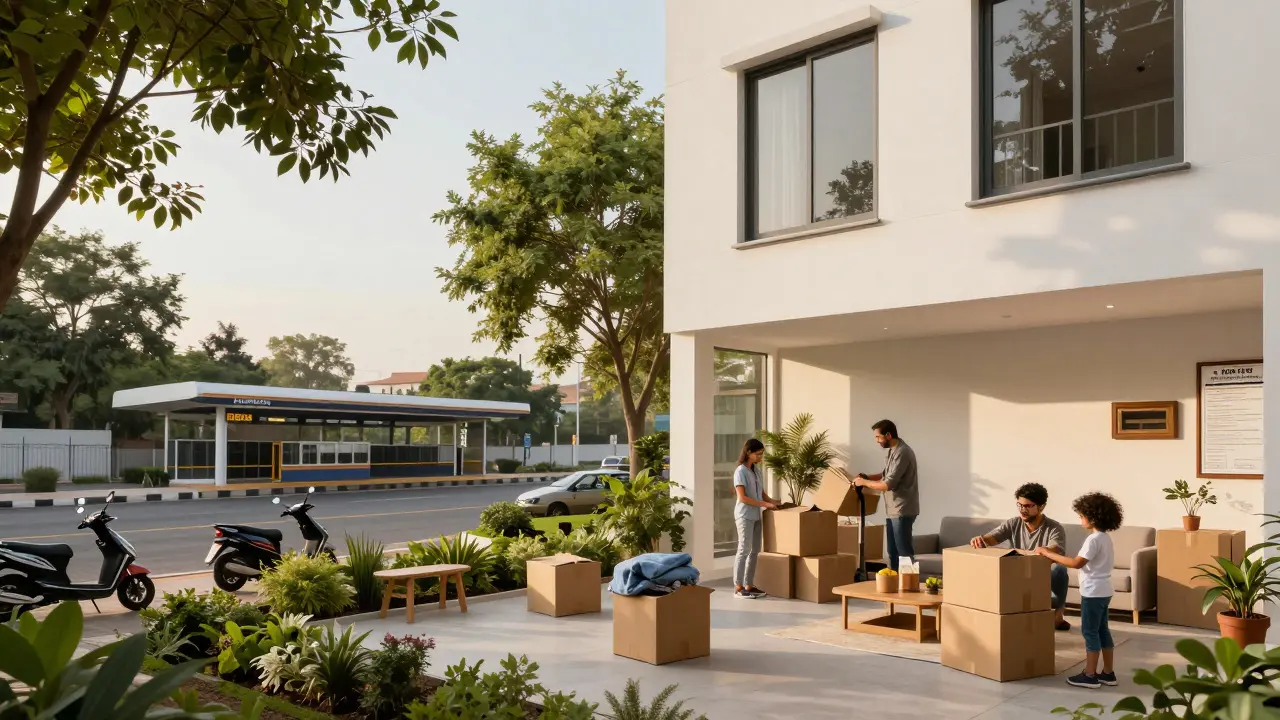
Jaipur’s real estate market isn’t just growing-it’s reshaping. What used to be a quiet city of heritage havelis and slow-paced neighborhoods is now a hotspot for buyers, builders, and investors looking for value beyond the usual metros. If you’re wondering whether now is the time to buy, rent, or invest in Jaipur, the data tells a clear story: prices are rising, demand is shifting, and new infrastructure is unlocking areas that were off the radar just five years ago.
What’s Driving Jaipur’s Real Estate Boom?
The real estate surge in Jaipur isn’t random. It’s tied to three big changes: infrastructure, migration, and policy. The Delhi-Mumbai Industrial Corridor (DMIC) is bringing logistics hubs and manufacturing plants within 100 km of the city. That means thousands of new jobs are coming, and with them, families who need homes. The Jaipur Metro Phase II extension, now under construction, will connect key residential zones like Malviya Nagar, Vaishali Nagar, and Sanganer to the city center by late 2026. That’s not just convenience-it’s value creation.
At the same time, professionals from Delhi, Gurgaon, and even Bengaluru are relocating to Jaipur for lower costs and better quality of life. A 2025 survey by the Rajasthan Urban Development Authority showed a 42% year-over-year increase in cross-city buyers. These aren’t just vacation home seekers-they’re permanent residents buying 2BHK apartments, paying EMIs, and enrolling kids in local schools.
Government policies are helping too. The Rajasthan Real Estate Regulatory Authority (RERA) has cracked down on delays and false claims. Over 850 projects are now registered, and buyers can track construction progress online. That trust is pulling in more cautious investors who once avoided smaller cities.
Where Are Prices Heading in 2026?
Property prices in Jaipur vary wildly by location. In the old city-like MI Road or Bapu Bazar-prices for old apartments hover around ₹4,500 to ₹6,000 per sq.ft. These are not for renovation beginners. Plumbing and electrical systems are often outdated, and parking is a lottery.
But in newer zones, the numbers tell a different story. In Vaishali Nagar, a 2BHK apartment in a RERA-registered project now sells for ₹8,500-₹10,500 per sq.ft. That’s up 28% since 2022. In Malviya Nagar, luxury projects with gym, swimming pool, and 24/7 security are pushing past ₹12,000 per sq.ft. For comparison, a similar unit in Gurgaon would cost ₹22,000+.
Land prices are rising even faster. In Sanganer, near the new airport expansion, plots of 100 sq.yards are now ₹1.2-₹1.8 crore. Five years ago, they were ₹50-70 lakh. The same stretch near Tonk Road saw a 65% jump in 2025 alone. This isn’t speculation-it’s infrastructure-driven demand.
Best Areas to Buy Property in Jaipur Right Now
Not all neighborhoods are created equal. Here are the top five areas for buyers in 2026, based on appreciation, amenities, and future potential:
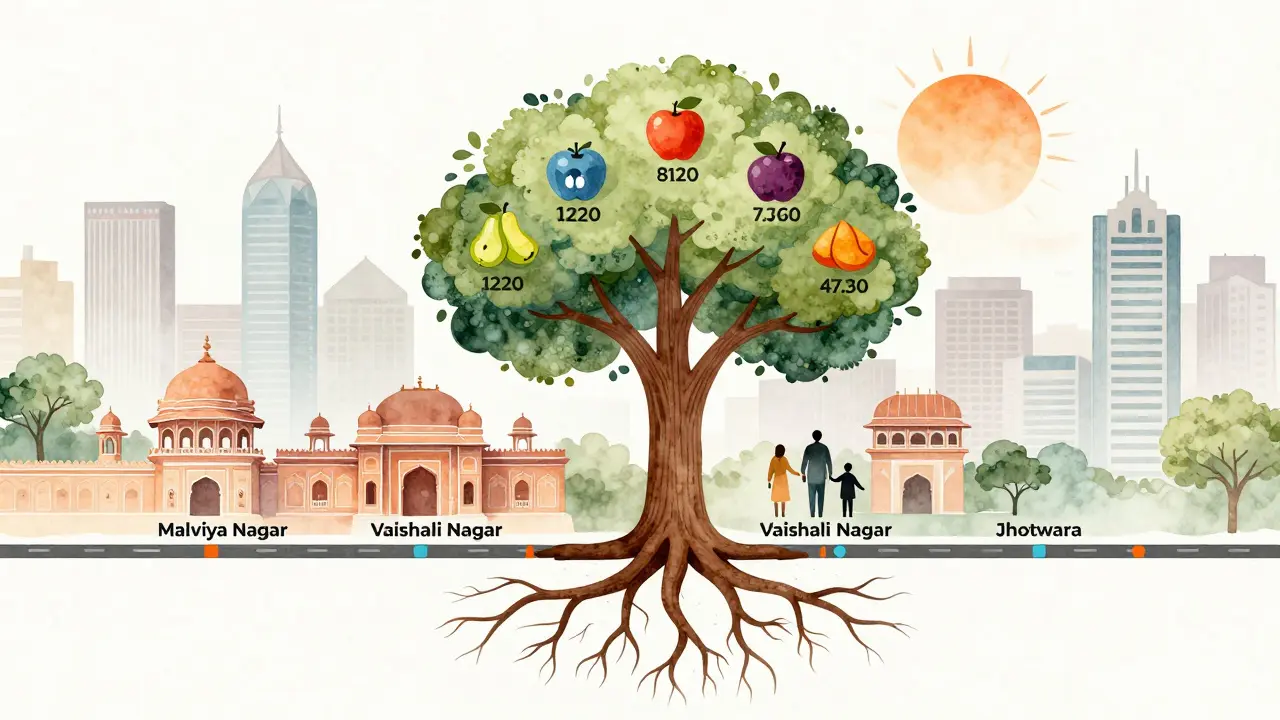
- Vaishali Nagar - The most balanced option. Good schools, hospitals, malls, and metro access. Ideal for families. Average price: ₹9,500/sq.ft.
- Malviya Nagar - The premium zone. High-end apartments, expat communities, and rising rental yields. Best for investors seeking long-term capital gain. Price: ₹11,000-13,000/sq.ft.
- Sanganer - The growth engine. Near the airport, industrial parks, and the new highway. Plot buyers are seeing 2x returns in 3 years. Riskier, but high reward. Price: ₹1.2-1.8 crore/100 sq.yards.
- Shyam Nagar - Affordable entry point. New projects under ₹6,000/sq.ft. Popular with first-time buyers and NRIs. Metro link coming in 2027.
- Jhotwara - The hidden gem. Close to the new IT park and upcoming metro line. Prices still under ₹7,000/sq.ft. But demand is spiking-up 50% in 2025.
Avoid areas like Chandpole or Mirza Ismail Road unless you’re buying for heritage value. These zones have no new development, poor drainage, and no public transport upgrades planned.
Rental Market: Is It Worth It?
If you’re not buying to live in, can you make money renting? Yes-but only if you pick the right location.
In Vaishali Nagar and Malviya Nagar, 2BHK apartments rent for ₹18,000-₹28,000 per month. That’s a 4-5% annual rental yield. In Sanganer, where most buyers are investors, rentals are harder to find because owners hold for appreciation. In Shyam Nagar, rentals are cheaper-₹12,000-₹16,000-but occupancy is high, with 90%+ tenant retention.
One investor bought a 1,200 sq.ft. apartment in Jhotwara in 2023 for ₹62 lakh. Today, it’s worth ₹88 lakh. He rents it for ₹15,000/month. His annual income is ₹1.8 lakh, but his capital gain over three years is ₹26 lakh. That’s the real math: appreciation beats rent in Jaipur.
What Buyers Are Saying-Real Stories
Rahul Mehta, a software engineer from Bangalore, moved to Jaipur in 2024. He bought a 2BHK in Vaishali Nagar for ₹78 lakh. "I was scared at first. I thought Jaipur was just temples and palaces. But the metro station is 800 meters away, my kid’s school is 5 minutes, and I pay ₹20,000 less in EMI than I would in Bangalore. I don’t miss the traffic. I miss the silence here."
Another buyer, Priya Kapoor, an NRI from Texas, invested in a plot in Sanganer. "I looked at 12 cities in India. Jaipur had the best land-to-price ratio. I didn’t build right away. I waited. Now, with the airport expansion approved, I’m getting offers to sell at 3x my cost. I’m holding. I think it’ll double again in five years."
These aren’t outliers. They’re the new normal in Jaipur.
How to Avoid Common Mistakes
Buying property in Jaipur is easier than ever-but mistakes still happen. Here are the top three pitfalls and how to dodge them:
- Buying without RERA registration - Never sign a deal unless the project is on the RERA website. Unregistered projects can be delayed indefinitely, and you have zero legal recourse.
- Chasing the cheapest price - A ₹5,500/sq.ft. deal in an unconnected area might cost you ₹10 lakh more in future commuting, time, and resale loss. Look at connectivity, not just cost.
- Ignoring water and power reliability - Many new projects advertise "24/7 supply," but in reality, water tanks and generators are still common. Ask for recent utility bills from current residents.
Always get an independent property valuation. In Jaipur, many builders inflate prices by 15-20% during launch. A certified valuer can tell you the real market rate.
What’s Next for Jaipur’s Market?
The next 18 months will be critical. The new metro lines will open, the airport expansion will begin construction, and the proposed Jaipur-Kota Expressway will break ground. These aren’t distant plans-they’re happening now.
Experts predict Jaipur’s real estate market will grow at 12-15% annually through 2030. That’s faster than Pune, Ahmedabad, or Lucknow. The city is becoming India’s next Tier-2 success story-not because of hype, but because of hard infrastructure, smart policy, and real demand.
If you’re looking to buy, now is the time to act. Prices won’t stay this low forever. The window for entry is closing.
Is now a good time to buy property in Jaipur?
Yes, if you’re buying for long-term growth or rental income. Prices are still 30-40% lower than in comparable Tier-1 cities, and infrastructure investments are accelerating. Areas like Vaishali Nagar, Malviya Nagar, and Sanganer are seeing steady appreciation. Waiting could mean paying 15-20% more in 2027.
Which area in Jaipur has the highest rental yield?
Vaishali Nagar and Shyam Nagar offer the highest rental yields, between 4% and 5%. These areas have strong tenant demand from young professionals, government employees, and families. Malviya Nagar has higher rent but lower yield due to higher property prices. Sanganer has low rental activity because most buyers hold land for appreciation.
Can NRIs buy property in Jaipur?
Yes, NRIs can buy residential and commercial property in Jaipur without special permission. They cannot buy agricultural land. The process is straightforward: get a PAN card, transfer funds through RBI-approved channels, and register the property under RERA. Many builders now offer virtual tours and remote closing for NRIs.
What’s the average price per sq.ft. in Jaipur in 2026?
Prices range from ₹4,500 in older parts of the city to ₹13,000 in premium zones like Malviya Nagar. The citywide average is ₹7,800 per sq.ft. for apartments. Land prices vary more-₹1.2 crore per 100 sq.yards in Sanganer, ₹35-50 lakh in peripheral areas.
How does Jaipur compare to Udaipur or Jodhpur for real estate investment?
Jaipur is far ahead in terms of infrastructure, job growth, and population. Udaipur and Jodhpur have lower prices, but demand is mostly tourism-driven. Jaipur has IT parks, metro expansion, and industrial zones creating permanent residents. For long-term investment, Jaipur offers better appreciation and liquidity. Udaipur and Jodhpur are better for vacation homes.