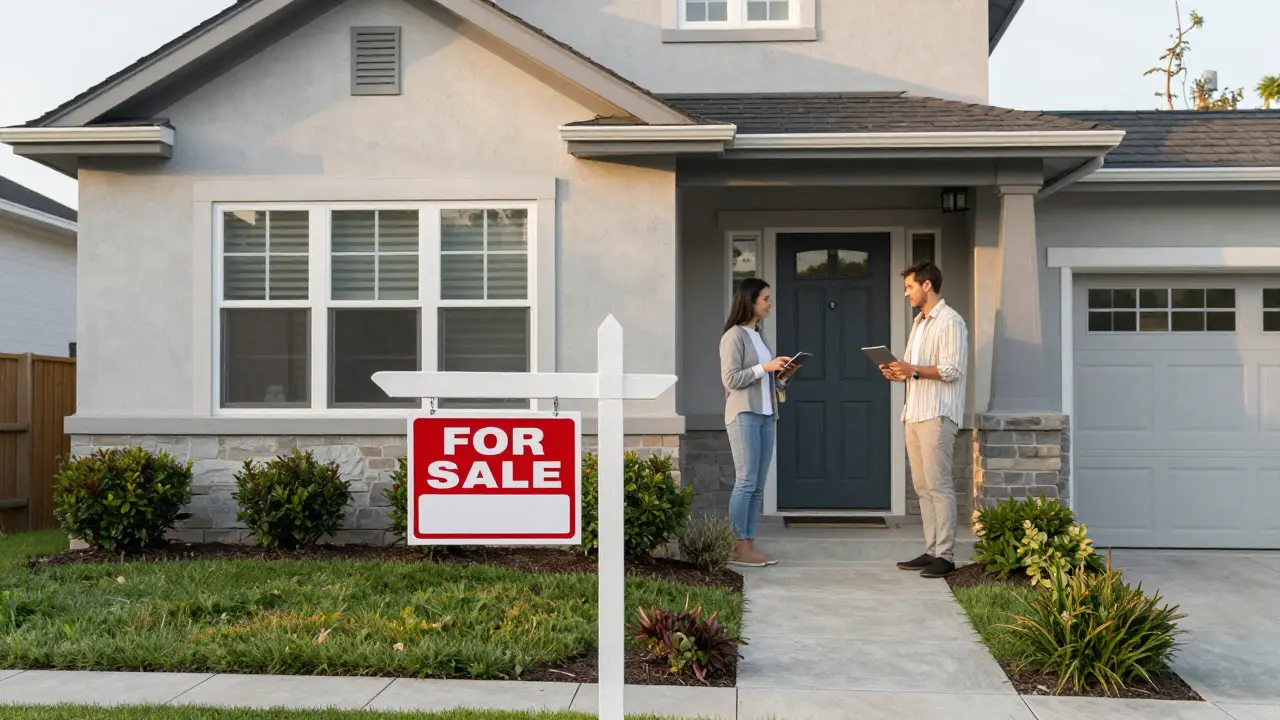
The real estate market in 2025 isn’t what it was two years ago. Homes aren’t selling in three days. Bidding wars are rare. And buyers aren’t panic-buying just to keep up. The market has cooled-but it hasn’t collapsed. It’s settling into something more normal, and that’s actually good news for most people.
Home Prices Are Stable, Not Falling
Don’t believe the headlines that say housing is crashing. Median home prices in the U.S. are up 2.1% year-over-year as of November 2025, according to the National Association of Realtors. That’s not a boom, but it’s not a bust either. In places like Boulder, Austin, and Raleigh, prices are still climbing slowly. In cities like Phoenix, Miami, and Detroit, they’ve flatlined or dipped slightly. The key? Location still matters. But the gap between expensive and affordable markets is narrowing.
What changed? Mortgage rates. After peaking above 8% in late 2023, rates settled around 6.5% in early 2025. That’s still high compared to 2021’s 3% lows, but it’s low enough that buyers can get back into the game-especially if they have steady income. Lenders are also relaxing some rules. Self-employed buyers? They can now use bank statements instead of tax returns in many cases. That’s a big deal.
Inventory Is Still Tight-But Not as Bad
There are fewer homes for sale than there were before the pandemic, but not nearly as few as in 2022. The national supply sits at about a 3.2-month supply, which is still below the 6-month balance point. That means it’s still a seller’s market in most places, but not a runaway one. In Boulder, for example, homes are sitting on the market for 45 days now, up from 18 days in 2022. That’s not a long time, but it’s enough for buyers to get inspections, negotiate, and think twice.
Why isn’t inventory rising? Because homeowners are staying put. They locked in rates below 4% and aren’t willing to trade them in for 6.5%. This is called “rate lock-in,” and it’s holding back the supply. Builders are adding homes, but slowly. Single-family starts are up 12% from 2024, but labor shortages and zoning rules are slowing things down. Most new construction is still in the suburbs, not downtown.
Buyer Demand Is Real-But More Selective
Millennials are still buying. Gen Z is starting to show up. And empty nesters are downsizing. But they’re not rushing. Buyers now ask for repairs before closing. They want smart home features. They’re checking walkability scores and school ratings. They’re using apps like Zillow and Redfin to compare neighborhoods, not just square footage.
First-time buyers are getting help too. Many states now offer down payment assistance programs that don’t need to be repaid. Colorado, for example, has a program that gives up to $15,000 to qualified buyers who complete a homebuyer education course. That’s not a loan. It’s a grant. And it’s being used by nearly 1 in 4 first-time buyers in the state.

Sellers Need to Price Realistically
If you’re selling, the days of listing at $800,000 and hoping for $900,000 are over. Homes that are priced right-based on recent comps, condition, and location-are still getting multiple offers. But homes that are overpriced? They sit. And sit. And then they drop. And then they drop again.
A home that’s priced 5% above market value takes 30% longer to sell, according to a 2025 study by Realtor.com. That’s not just lost time. It’s lost money. Sellers who adjust their price within the first 14 days sell for 7% more on average than those who wait.
Staging matters more than ever. Buyers aren’t just looking at the house-they’re imagining their life there. A clean, decluttered home with good lighting sells faster. So does a home with updated kitchens and bathrooms. But you don’t need a full renovation. A fresh coat of paint and new fixtures often do the trick.
Mortgage Rates Are the Big Wild Card
Everyone’s watching the Fed. If inflation stays under control and the economy doesn’t overheat, rates could dip to 6% by mid-2026. That would spark a new wave of buying. But if inflation spikes again-or if the Fed keeps rates high to fight it-then the market could stay stuck in this slow lane for longer.
Right now, adjustable-rate mortgages (ARMs) are making a comeback. Some lenders are offering 5/1 ARMs at 5.8%, which is cheaper than a 30-year fixed. But they’re risky. If rates jump after five years, your payment could spike. Only consider this if you plan to sell or refinance before the adjustment.
Fixed-rate loans are still the safest bet for most people. And if you can afford a 20% down payment, you’ll avoid private mortgage insurance (PMI)-which saves you hundreds a month.
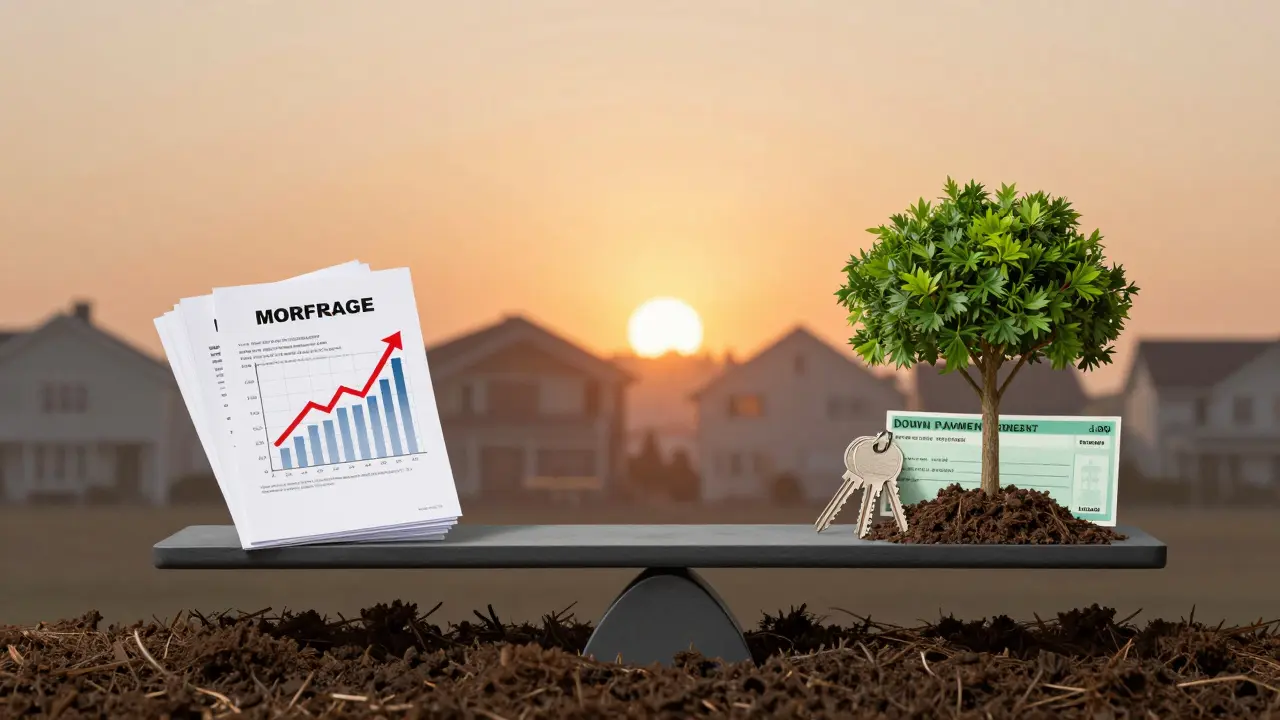
Investors Are Still Active-But Smarter
Corporate investors aren’t buying up entire neighborhoods like they did in 2021 and 2022. Many states have passed laws limiting how many homes a single entity can buy in one area. In Colorado, you can’t own more than 10 single-family homes unless you’re a licensed property manager.
But individual investors? They’re still in the game. They’re buying fixer-uppers in up-and-coming areas. They’re using the 1031 exchange to defer capital gains. And they’re focusing on rentals that cash flow well, not just those that might appreciate. The average rental yield in 2025 is 7.3% in the Midwest, 5.1% in the West, and 4.8% in the Northeast. That’s better than most stocks.
What’s Next? The Market Is Becoming More Human
The real estate market in 2025 feels less like a casino and more like a neighborhood. People are making decisions based on their lives-not just numbers. A buyer might choose a smaller house in a great school district over a bigger one downtown. A seller might accept a lower offer from a family who’ll take care of the garden instead of a cash buyer who’ll tear it down.
Technology helps. AI tools can now predict which homes will sell fastest based on photos, descriptions, and local events. But the human touch still wins. A good agent knows when to push a buyer to act-and when to tell them to wait.
The bottom line? The real estate market isn’t broken. It’s recalibrating. And for most people, that’s a good thing.
Are home prices going to drop in 2026?
Most experts expect home prices to rise slowly-around 1% to 3%-in 2026, not drop. The biggest factor is mortgage rates. If they fall below 6%, demand will rise and push prices up. If they stay high, prices will flatline. But a nationwide crash isn’t likely. Supply is too low, and demand is still strong.
Is now a good time to buy a house?
Yes-if you’re ready to stay put for at least five years and you’ve got a stable income. Mortgage rates are high, but they’re stable. Inventory is low, but it’s enough to choose from. The biggest mistake buyers make is waiting for the “perfect” moment. That moment rarely comes. If you can afford it and you like the home, go for it.
Should I sell my house now or wait?
If you need to sell-for a job, family, or lifestyle change-now is fine. You won’t get the peak prices from 2022, but you’ll still get a fair price. If you’re not in a rush, wait until early 2026. Rates may drop, and more buyers could enter the market. But don’t wait too long. If you’re not pricing right, your home will sit.
What’s the best way to get a mortgage in 2025?
Shop around. Don’t just go with your bank. Credit unions often have better rates. Look at FHA loans if you can’t put down 20%-they require as little as 3.5% down. Get pre-approved before you start looking. And if you’re self-employed, gather your bank statements and profit-and-loss statements early. Lenders need them.
Are rental properties still a good investment?
Yes, if you choose wisely. The average rent-to-price ratio is above 1% in most mid-sized cities, meaning you’ll collect more in rent each month than you pay in mortgage and taxes. Look for areas with job growth, like Nashville, Charlotte, or Boise. Avoid overpriced markets like San Francisco or New York unless you’re buying for long-term appreciation. And always plan for vacancies and repairs.
13 Responses
OMG I KNEW IT!! Everyone’s just lying about the market being ‘stable’-it’s totally a bubble waiting to pop!! I heard on TikTok that the Fed’s printing money like it’s confetti and soon houses will be worthless!! 😱
honestly i think this article is way too optimistic 😅 i live in phoenix and my neighbor’s house has been on the market for 6 months and they just dropped it $40k… again. people are just not showing up. i dont think ‘stable’ means what you think it means. also, who’s even buying? the rich? lol
Great breakdown. The rate lock-in effect is real-I’ve seen it firsthand with my uncle in Texas. He’s got a 3.25% rate and won’t even consider moving, even though he needs more space. Builders are stuck too-permits take 6 months, labor costs are insane, and zoning boards are paralyzed. It’s not a market failure. It’s a system adjusting.
Also, the down payment grants in Colorado? Huge. My cousin used one last year and saved $12K. No strings. Just help. More states need to copy this.
And yes, staging matters. I sold my place last year with just new lighting and a deep clean. No renovations. Got 3 offers in 10 days. Price was fair. No drama.
Investors? Still here, but quietly. No more buying 50 homes in one zip code. Now it’s one fixer at a time. Smart moves.
Bottom line: it’s not a crash. It’s a correction. And honestly? Better for everyone who actually wants to live somewhere, not flip it in 6 months.
the market is becoming more human and thats beautiful man. we stopped treating houses like stocks and started treating them like homes. thats the real win. no more bidding wars, no more panic, no more greed. just people wanting a place to grow old in. i love it.
As someone from India watching this from afar-this is fascinating. Back home, we’re still in a frenzy. Prices up 20% last year. But here? It’s calm. I think the U.S. is finally growing up. No more irrational exuberance. Just real people making real choices. Respect.
I’ve been renting for 8 years and just bought my first home last month. I’m 31. I didn’t wait for the ‘perfect’ time-I waited for the right one. I found a 1950s bungalow in a neighborhood with a community garden and a library walking distance. It needed work, but the bones were good. I got a 30-year fixed at 6.25%. My payment is less than my rent was. And I cried when I got the keys.
People say ‘buy when rates drop’-but what if the drop never comes? What if you wait until you’re 40 and still renting? What if you miss out on building equity, on planting a tree in your yard, on having a space that’s yours? This article says it right: if you can afford it and you like the house-go for it. The numbers will follow the life you build inside it.
Also, thank you to whoever wrote this. It felt like someone finally spoke to me like an adult, not a speculator.
THEY’RE LYING TO YOU. EVERY SINGLE WORD. The Fed is manipulating the data. The ‘stable’ prices? They’re just hiding the collapse by freezing listings. The government’s paying homeowners to not sell. That’s why inventory is low. That’s why ‘comps’ are fake. You think that $15K grant is free? Nah. It’s a trap. They’re getting you hooked so they can tax you later. And the ‘smart investors’? They’re all part of the same cabal. They own the banks, the appraisal firms, the Zillow algorithms. You think you’re making a choice? You’re being led. Wake up. The real estate market is just the first step before they take your house entirely. They’ve already started using AI to predict which homes will be seized next. Don’t sign anything. Don’t trust anyone. The truth is buried under spreadsheets and realtors in nice suits.
There is no such thing as a ‘fair price.’ That phrase is misleading. Prices are determined by supply and demand, not by what someone ‘feels’ is fair. Also, ‘staging’ is not a magic trick-it’s manipulation. And you say ‘a fresh coat of paint’ is enough? That’s a lie. If your home has outdated plumbing or electrical, it’s a liability, not a ‘fixer-upper.’ You’re normalizing poor standards. And don’t get me started on the misuse of ‘cash flow’ in relation to rentals. That term is misapplied 90% of the time. This article is dangerously oversimplified.
Y’all are so naive. I’ve been in this game since 2018 and let me tell you-this ‘calm’? It’s the calm before the storm. The second rates dip, the whole thing goes sideways. Investors are hoarding cash. Banks are tightening. And don’t even get me started on how the Fed’s gonna kill this with one tweet. I saw a guy in Austin lose $300K last year because he bought ‘at the bottom.’ The bottom’s a myth. There’s always a lower one. And now everyone’s acting like it’s cozy? Pfft. I’m selling my rental next week. Gonna cash out before the whole thing implodes. You’ll see.
Why are we even talking about this? America’s real problem isn’t housing-it’s that we let immigrants and foreigners dictate what ‘normal’ is. We used to build houses for Americans, not for ‘first-time buyers’ who need grants and ‘walkability scores.’ This whole article reads like a corporate PR piece. Real Americans don’t care about Zillow. They care about a roof over their head. And right now, the system’s rigged. You think a guy from India gets to comment on this like he’s an expert? Get real.
It is lamentable that the moral underpinnings of homeownership have been reduced to a series of financial calculations. The sanctity of the home-as a place of stability, of generational continuity, of quiet dignity-is being eroded by transactional thinking. One does not purchase a dwelling as one purchases a commodity. One inherits a responsibility. And yet, we are told to ‘staging’ our hearths, to ‘cash flow’ our sanctuaries, to ‘optimize’ our domestic lives. This is not progress. This is commodification masquerading as pragmatism.
And who benefits? Not the family who seeks shelter. Not the child who grows up in a house with a garden. No-the beneficiaries are the algorithmic platforms, the institutional investors, the financial engineers who profit from the illusion of mobility. We have forgotten that a home is not an asset. It is an heirloom.
Bro this whole thing is just a distraction. The real issue? The government’s been lying about inflation for years. And now they’re using real estate to keep us docile. ‘Oh look, prices are stable!’ But the cost of everything else? Gas, food, meds? Skyrocketing. Meanwhile, they tell you to ‘get pre-approved’ like that’s gonna fix the system. It’s not. It’s a trap. I’ve got 3 kids and I’m still renting. They want us to think we’re ‘making smart choices’ when we’re just surviving. Wake up. This isn’t a market. It’s a control mechanism.
Thank you, Rahul, for saying what I’ve been feeling but couldn’t put into words. I’ve been reading all these comments and it’s wild how some people are so scared, while others are so cynical. But you? You just… got it. It’s not about timing the market. It’s about choosing to build a life. I bought my house last month and I planted a cherry tree in the backyard. I don’t know if it’ll ever bear fruit. But I’ll be here to see it. And that’s worth more than any appraised value.