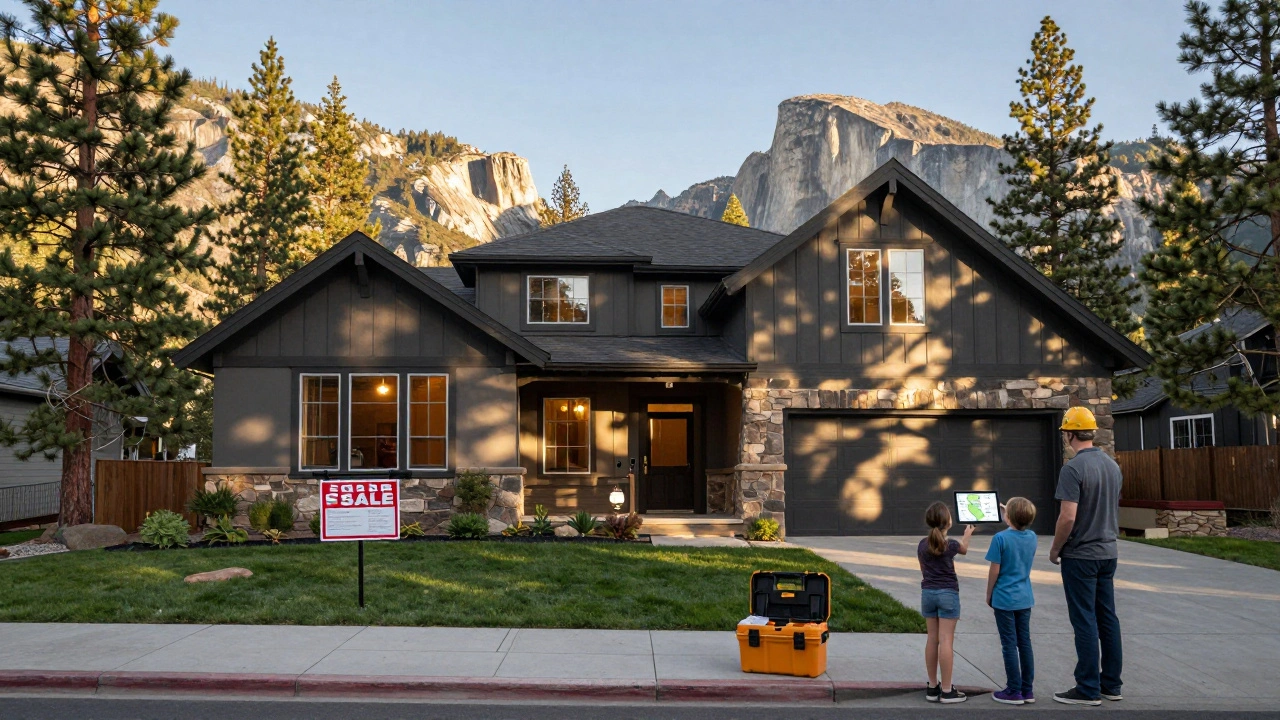
When people talk about real estate property, they’re usually thinking about land, houses, condos, or commercial buildings. But what most don’t realize is that real estate property isn’t just a place to live or a piece of paper with a deed on it. It’s a financial tool, a lifestyle decision, and sometimes, the biggest risk or reward of your life. If you’re considering buying, selling, or investing in real estate property, you need more than a dream-you need facts.
What Exactly Is Real Estate Property?
Real estate property refers to any piece of land along with the permanent structures attached to it. That includes houses, apartments, warehouses, farms, shopping centers, and even vacant lots. It’s different from personal property like cars or furniture because it can’t be moved. The value of real estate property comes from location, condition, zoning laws, and demand in the area.
In the U.S., most residential real estate property falls into four categories: single-family homes, condos, townhomes, and multi-family units (like duplexes or fourplexes). Commercial real estate property includes offices, retail spaces, hotels, and industrial buildings. Each type behaves differently in the market. For example, single-family homes in Boulder typically hold their value better during economic downturns than commercial retail spaces, which can sit empty for months if foot traffic drops.
Why Location Still Rules Everything
You’ve heard it before: “Location, location, location.” But why does it still matter so much in 2025? Because people still need to live near work, schools, hospitals, and grocery stores. A house in a neighborhood with good public schools might sell for 30-50% more than an identical house two miles away in a district with lower ratings. That’s not magic-it’s data. A 2024 study by the National Association of Realtors showed that homes in top-rated school districts sold 17% faster and at 22% higher prices than those outside them.
But location isn’t just about schools. It’s about transit access, safety, future development plans, and even tree cover. In Boulder, properties near the Flatirons or with easy access to the bus line and bike paths command higher prices. Meanwhile, homes near proposed highway expansions or industrial zones often lose value. You can fix a leaky roof. You can’t fix a bad location.
Types of Real Estate Property and Who They’re For
Not all real estate property is made for the same person. Here’s a quick breakdown:
- Single-family homes - Best for families, long-term owners, or those who want control over renovations. They’re the most common type of residential property in the U.S.
- Condos - Popular with first-time buyers, retirees, and urban professionals. You own the unit, but shared spaces (hallways, pools, gyms) are managed by an HOA. Monthly fees can range from $200 to $800 depending on amenities.
- Townhomes - A middle ground between condos and single-family homes. Usually have small yards and no shared walls on both sides. HOA fees are lower than condos but still apply.
- Multi-family units - Ideal for investors. A duplex lets you live in one unit and rent out the other. In Boulder, a well-maintained fourplex can generate $4,000-$6,000 in monthly rent, covering the mortgage and then some.
- Commercial property - Not for beginners. Office buildings, retail strips, and warehouses require more capital, more management, and deeper knowledge of zoning and tenant law.
If you’re buying to live in, focus on how the space fits your life. If you’re buying to invest, focus on cash flow, vacancy rates, and property management costs. The same building can be a dream home for one person and a money pit for another.

The Hidden Costs No One Tells You About
Most first-time buyers think their biggest cost is the down payment. They’re wrong. The real financial shock comes after closing.
Here’s what most overlook:
- Property taxes - In Colorado, they average 0.5% to 0.7% of the home’s value annually. For a $600,000 house, that’s $3,000-$4,200 per year.
- Homeowners insurance - In areas prone to wildfires or hail (like Boulder), premiums are rising. Expect $1,500-$3,000/year.
- HOA fees - Can be $200-$800/month. Some include water and trash. Others charge extra for parking or storage.
- Maintenance - Experts recommend budgeting 1-3% of the home’s value each year for repairs. That’s $6,000-$18,000 a year on a $600,000 home.
- Utilities - Older homes in Colorado can cost $300-$500/month in winter just for heating.
These aren’t optional. Skip budgeting for them, and you’ll be surprised when you can’t afford to fix the furnace in January.
How to Know If It’s a Good Investment
Buying real estate property as an investment isn’t about hoping the market goes up. It’s about math. The 1% Rule is a simple way to check if a rental property makes sense: monthly rent should be at least 1% of the purchase price.
Example: A $400,000 house should rent for $4,000/month or more. If it only rents for $2,800, you’re likely cash-flow negative after taxes, insurance, and maintenance.
Another metric: the cap rate. It’s the annual net income divided by the property’s purchase price. A cap rate of 5-8% is healthy in most U.S. markets. In Boulder, cap rates for single-family rentals are around 4-5% because prices are high. That’s not terrible if you expect appreciation. But if you’re counting on rent to cover everything, you’ll need a higher cap rate.
Also, check vacancy rates. In Boulder, the average rental vacancy is 2.5%. That’s low. That means tenants are hard to find, but once you have one, they tend to stay. In cities with 8-10% vacancy, you might go months without rent.

When to Walk Away
Not every real estate property deal is worth it. Here are red flags:
- The home needs more than $20,000 in structural repairs (foundation, roof, plumbing).
- The neighborhood has rising crime, declining school ratings, or new zoning for industrial use.
- The seller won’t let you do a full inspection.
- You’re being pushed into a quick closing with no financing contingency.
- The property is priced 15% above comparable homes in the area.
Don’t fall in love with a house. Fall in love with the numbers. If the numbers don’t add up, walk away-even if it’s your dream home. You can find another dream. You can’t fix bad math.
How the Market Is Changing in 2025
Interest rates are still above 6%, and that’s changed buyer behavior. More people are renting than buying. Investors are snapping up homes because they can still get positive cash flow. In Boulder, the median home price is $950,000-up 4% from last year. But the number of sales is down 12%. That means fewer buyers, but more competition among those who are serious.
Also, remote work isn’t dead. People still want homes with dedicated offices, outdoor space, and high-speed internet. Homes with these features are selling 30% faster than those without.
And climate risk is now part of every appraisal. Flood zones, wildfire risk, and heat exposure are listed in property reports. Insurers are dropping coverage in high-risk areas. If you’re buying in a wildfire-prone zone, make sure you can actually get insurance-and what it covers.
Where to Start
If you’re new to real estate property, here’s a simple plan:
- Check your credit score. Aim for 720+ to get the best mortgage rates.
- Get pre-approved for a loan. Don’t just get pre-qualified-get the bank’s official letter.
- Decide: Are you buying to live in or to invest?
- Choose a neighborhood based on data, not vibes. Look at school ratings, crime maps, and recent sales.
- Work with a buyer’s agent who knows the local market. They don’t cost you anything-the seller pays.
- Get a home inspection. Don’t skip it. Even new homes have issues.
- Negotiate repairs or price based on the inspection.
- Close and start budgeting for the hidden costs.
Real estate property doesn’t have to be complicated. But it does require patience, research, and honesty with yourself. The best deals aren’t the ones that look flashy. They’re the ones that make sense after you’ve done the math-and still feel right.
What’s the difference between real estate and property?
All real estate is property, but not all property is real estate. Property is anything you own-your car, jewelry, or laptop. Real estate specifically means land and anything permanently attached to it, like houses, buildings, or wells. It’s immovable and subject to zoning laws, taxes, and title records.
Is buying real estate property a good investment in 2025?
Yes, if you buy in the right place and for the right reason. Real estate has historically outperformed stocks over 20+ year periods. But in 2025, high interest rates and prices mean you need to focus on cash flow, not just appreciation. Investors who buy rental properties with strong tenant demand and low maintenance costs are still making solid returns. Buyers who stretch their budget for a “dream home” without considering upkeep often lose money.
How much money do I need to buy a house?
It depends. For a $500,000 home, you’ll need at least $25,000 for a 5% down payment, $10,000-$15,000 for closing costs, and another $5,000-$10,000 for moving and initial repairs. You should also have 3-6 months of mortgage payments saved as an emergency fund. Many first-time buyers underestimate this and get stuck paying for repairs they can’t afford.
Can I buy real estate property with bad credit?
Yes, but it’s harder and more expensive. FHA loans allow credit scores as low as 580 with a 3.5% down payment. But your interest rate will be higher-maybe 1-2% more than someone with a 760 score. That adds thousands in interest over the life of the loan. If your credit is below 600, focus on improving it first. A 6-month plan to raise your score by 50 points can save you $150+ a month on your mortgage.
Should I buy a fixer-upper?
Only if you have the time, skills, and budget for surprises. Many fixer-uppers look cheap on paper, but hidden issues (mold, outdated wiring, foundation cracks) can add $30,000-$100,000 in repairs. If you’re not a contractor or don’t have a trusted team, stick to move-in-ready homes. The savings aren’t worth the stress unless you’re doing it for the long term.
8 Responses
Real estate isn't just about bricks and mortar-it's about building long-term security. I've seen too many people chase dreams without running the numbers, and it ends in stress, not equity. If you're buying to live in, make sure the neighborhood supports your life for the next 10 years. If you're investing, treat it like a business: cash flow first, emotion last. The market will always correct itself-but your decisions don't get a do-over.
I appreciate how this post breaks down the difference between residential and commercial property. One thing I’d add is that location isn’t just about schools or transit-it’s also about community resilience. Areas with strong neighborhood associations and local business networks tend to weather economic downturns better. I’ve seen condos in cities with active HOAs retain value even when the broader market dipped. It’s not just geography-it’s social infrastructure.
Thank you for the detailed breakdown. I especially agree with the point about hidden costs. Many first-time buyers assume their mortgage payment is their only obligation, but property taxes, insurance, and maintenance can easily double monthly housing expenses. I recommend using a real estate calculator that includes all these line items-not just PITI. Also, don’t forget to factor in potential HOA fee increases. They’re often capped at 10% annually, but that’s still a shock if you’re not prepared.
The 1% rule is outdated in markets like Boulder. I’ve seen properties priced at $800,000 renting for $4,200-that’s only 0.63%. Appreciation is the only reason it works, and that’s becoming riskier with interest rates where they are. Investors need to look at net operating income, not just gross rent. And don’t forget vacancy loss-even 2.5% vacancy adds up over a year.
Good guide. I bought a duplex in Denver last year. Rent covers 80% of the mortgage. I live in one unit, rent out the other. It’s not glamorous, but it’s stable. Maintenance is the real test-last winter, the furnace died. $3,200. No emergency fund? You’re in trouble. Do the math before you sign.
I just bought my first home-a fixer-upper-and I’m so nervous. I thought I was being smart by saving on the price, but now I’m staring at a cracked foundation and wondering if I should’ve just rented. I’m not a contractor, I’m not handy, and now I’m spending every weekend on YouTube tutorials. Maybe I should’ve listened to the part about ‘only do this if you have the budget for surprises.’ I’m so embarrassed to admit I ignored it.
Let’s be real-most of these ‘guides’ are written by people who’ve never owned a rental property. The 1% rule? A fantasy in 2025. You need at least a 1.5% yield to even break even after property management, vacancies, and HOA hikes. And don’t even get me started on ‘investors’ who think Boulder is a goldmine-prices are inflated by tech bros with trust funds. If you’re not a cash-rich, tax-savvy entity with a CPA and a property manager, you’re just a renter with a mortgage. And you’re paying for the privilege.
OMG I’m crying. I just lost my dream home because the inspection revealed mold under the kitchen floor. I had my whole Pinterest board ready-lavender walls, hanging plants, a reading nook by the window. Now I’m sleeping on my couch, sobbing into my ‘I ❤️ Real Estate’ mug. Why does this always happen to me?! I just wanted to belong somewhere. Is it too much to ask for a house that doesn’t hate me?