
Real estate agents spend nearly 40% of their workweek on paperwork, scheduling, and data entry-not showing homes or closing deals. That’s not just inefficient. It’s expensive. The right real estate software doesn’t just make life easier. It turns busy agents into high-performing brokers by cutting manual work, reducing mistakes, and keeping clients happy.
What real estate software actually does
Real estate software isn’t one tool. It’s a collection of systems designed to handle the messy, repetitive parts of running a real estate business. Think of it as your digital assistant that never sleeps, never forgets a deadline, and never misplaces a client’s email.
At its core, real estate software handles:
- Tracking leads from first contact to closing
- Scheduling showings and open houses automatically
- Generating contracts, disclosures, and marketing materials in minutes
- Syncing property listings across MLS, Zillow, Realtor.com, and your website
- Tracking commissions, expenses, and client communications in one place
Companies like Keller Williams, RE/MAX, and independent brokers using these tools report 30-50% reductions in admin time. That’s 10-15 hours a week back for client calls, follow-ups, and closing deals.
Must-have features in 2025
Not all real estate software is built the same. Here’s what actually matters today:
- CRM integration: Your software must track every interaction-texts, calls, emails, open house visits. If you have to manually log a client’s preference for a backyard pool, you’re doing it wrong.
- MLS sync: Listing updates should happen automatically. If you’re copying and pasting property details from MLS into your website, you’re wasting time and risking errors.
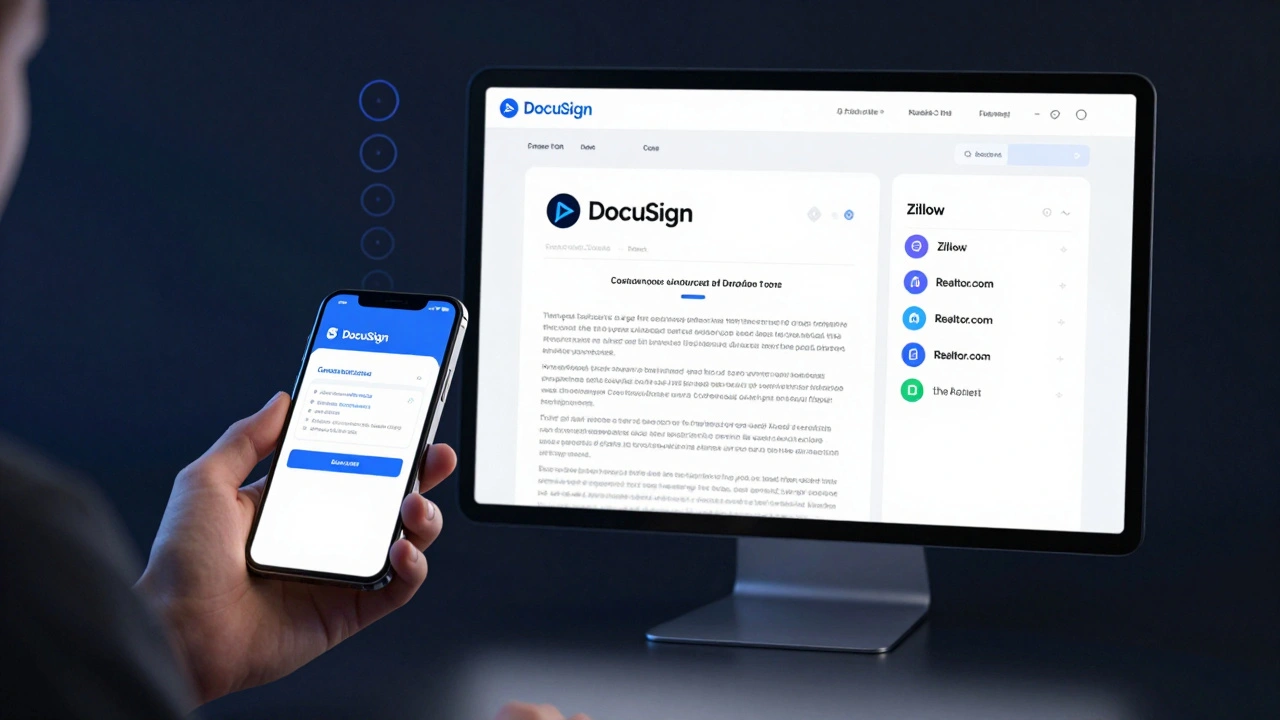
- Electronic signatures: Clients don’t want to print, sign, scan, and email documents. Platforms like DocuSign and HelloSign are now standard.
- Automated follow-ups: A client who views a home on Tuesday should get a personalized message by Thursday. Software can do this without you lifting a finger.
- Mobile access: You’re not in the office. Your software needs to work on your phone. Viewing listings, updating statuses, sending contracts-all from your pocket.
Tools like Salesforce Real Estate Cloud, Zapier-connected systems, and LionDesk have made these features standard. If your software doesn’t do at least three of these, you’re running on 2015 tech.
Top platforms in 2025
There are dozens of options, but only a few stand out based on real user feedback from agents in the U.S. and Canada in 2025:
| Platform | Best for | CRM Included? | MLS Sync? | Monthly Cost (USD) |
|---|---|---|---|---|
| Salesforce Real Estate Cloud | Large teams, brokerages | Yes | Yes (via integration) | $150-$300 |
| Zoho CRM for Real Estate | Small teams, solo agents | Yes | Yes | $12-$40 |
| LionDesk | Lead nurturing, automation | Yes | Yes | $49-$149 |
| Dotloop | Transaction management | No | No | $35-$75 |
| Follow Up Boss | Lead capture, texting automation | Yes | Yes | $69-$199 |
Most agents start with Zoho CRM or LionDesk. They’re affordable, easy to learn, and connect to everything you already use. Salesforce is for teams with 10+ agents. Dotloop is the go-to for closing paperwork. Follow Up Boss wins for agents drowning in cold leads.
How to pick the right one
Don’t buy the shiniest tool. Buy the one that solves your biggest pain point.
Ask yourself:
- Do you lose leads because you forget to follow up? → Go for Follow Up Boss or LionDesk.
- Do you spend hours fixing listing errors? → Pick a platform with direct MLS sync.
- Are you drowning in contracts? → Dotloop or SkySlope.
- Do you manage multiple agents? → Salesforce or Zoho.
Also, check for:
- Free trial (at least 14 days)
- Training videos or onboarding support
- Real user reviews (not just 5-star ratings-look for comments about customer service)
- Integration with your calendar, email, and phone system
One agent in Austin switched from a clunky legacy system to Zoho CRM. Within three months, her lead conversion rate jumped from 12% to 27%. Why? She stopped missing follow-ups. The software reminded her. She didn’t have to remember.
What most agents get wrong
People think buying software is the hard part. It’s not. The hard part is using it.
Here are the three biggest mistakes:
- Not training your team: If your assistant doesn’t know how to log a call, the CRM is useless. Dedicate 2 hours to training before launch.
- Trying to do everything at once: Start with one feature-like automated follow-ups. Master it. Then add another.
- Ignoring data hygiene: If your client names are messy (“John D.”, “John Doe”, “JD”), your reports will be garbage. Clean your data before importing.
One broker in Atlanta spent $12,000 on software, then didn’t train his team. Six months later, he canceled the subscription. He said, “It didn’t work.” The software worked fine. He just didn’t use it.

Real results from real users
Agents using real estate software consistently report:
- 30-60% faster lead response times
- 20-40% increase in closed deals
- 50% fewer missed appointments
- 90% reduction in contract errors
A solo agent in Phoenix went from 12 closed deals a year to 28 after switching to LionDesk. Her secret? Automated birthday messages and post-closing check-ins. Clients felt valued. They referred friends.
Another agent in Chicago used to spend 20 hours a week on listings. After MLS sync, that dropped to 3. He now spends that time hosting open houses.
What’s next for real estate software
AI is no longer a buzzword-it’s a feature. In 2025, top platforms use AI to:
- Predict which leads are most likely to buy
- Write personalized listing descriptions
- Suggest the best time to call a client based on their behavior
- Auto-generate social media posts from listing photos
Platforms like Realestate.com and Zillow now offer AI-powered listing optimization. You input basic details. The software suggests headlines, descriptions, and even photo order based on what performs best in your market.
Don’t wait for AI to replace you. Use it to work smarter.
Final advice: Start small, think long-term
You don’t need the most expensive system. You need the one you’ll actually use.
Start with a free trial. Pick one feature to improve-maybe follow-ups or listing uploads. Get good at that. Then add another. Don’t try to overhaul everything at once.
Real estate software isn’t about tech. It’s about time. It’s about not losing clients because you were too busy typing. It’s about closing more deals while working fewer hours.
That’s the real return on investment.
Do I need real estate software if I’m a solo agent?
Yes. Solo agents benefit the most because they wear every hat. Without software, you’re spending hours on tasks that could be automated-like sending follow-up texts, updating listings, or tracking client preferences. Tools like Zoho CRM or LionDesk start under $20/month and can save you 10+ hours a week.
Can real estate software replace my assistant?
It can handle the repetitive tasks, but not the human parts. Software can schedule showings, send contracts, and remind you to follow up. But it can’t read a client’s body language, negotiate a counteroffer, or comfort someone who just lost their home. Use software to free up your assistant for higher-value work-like building relationships and managing transactions.
Is MLS integration really necessary?
If you’re listing properties, yes. Without MLS sync, you’re manually copying and pasting property details into your website, Zillow, and Facebook. One typo can cost you a sale. MLS integration ensures your listings are always accurate, updated in real time, and visible everywhere. It’s not optional-it’s basic professionalism.
How long does it take to set up real estate software?
Most platforms take 2-5 days to set up. Importing contacts and syncing your calendar can take longer if your data is messy. The key is to start with a clean list of clients and a clear idea of what you want to automate. Don’t wait for perfection. Start with 80% of your data and fix the rest as you go.
What’s the cheapest real estate software that actually works?
Zoho CRM’s free plan is the best starting point. It includes contact management, email tracking, and basic automation. For $12/month, you unlock SMS, calendar sync, and MLS integration. Many agents run their entire business on Zoho for under $30/month. It’s not flashy, but it’s reliable and gets the job done.
If you’re still using spreadsheets, paper files, or sticky notes to manage clients-you’re not just behind. You’re leaving money on the table. Real estate software isn’t a luxury. It’s the new baseline. The agents who win in 2025 aren’t the ones who work the hardest. They’re the ones who work the smartest.
15 Responses
I've been using Zoho CRM for six months now and the time savings are insane. I used to spend two hours every morning just updating listings and chasing down signatures. Now it's all automatic. I actually have time to drink coffee before 10 a.m.
As someone from India who works with US clients, I can say this software gap is real. Many agents here still use Excel and WhatsApp for everything. It’s chaos. Tools like LionDesk help bridge that gap without breaking the bank.
Okay, I just had to say this… I switched to Follow Up Boss last year and I cried the first time I got a referral because the software reminded me to text my client on their dog’s birthday… I didn’t even remember the dog’s name, but the software did… and now I have three new clients from that one text… I’m not even joking… it’s like having a magic fairy who knows everyone’s birthday and never forgets to send cake emojis…
Let’s be real-Zoho CRM is for amateurs. If you’re not on Salesforce Real Estate Cloud, you’re basically running a lemonade stand with a spreadsheet. You think you’re saving time? You’re just delaying the inevitable collapse of your business when a competitor with AI-driven lead scoring steals your top clients. This isn’t tech-it’s survival. And if you’re still using manual MLS entry in 2025? You’re not an agent. You’re a relic.
My ex-agent friend used Dotloop and then got divorced and lost her entire client list because she didn’t back up her data… and now she’s working at Target… I’m not saying software is the problem… but maybe… just maybe… you shouldn’t put all your eggs in one digital basket… I mean… what if the server crashes? What if Apple deletes your account? What if the algorithm decides you’re ‘not a high-value client’? I’m just saying… paper files have survived wars…
lol i just started using liondesk and i swear it’s like having a hype friend who texts you ‘hey did you follow up with sarah yet?’ and then sends you a meme of a cat holding a contract… i’m not even kidding… i closed two deals last week because the software nudged me… i’m not techy at all but this thing just… works…
I tried to use Salesforce last year and messed up my contact list so bad I had 37 entries for ‘John Smith’ and one of them was just ‘JS’… I cried. But then I spent a weekend cleaning my data, and now I’m not just using software-I’m in love with it. It’s like organizing your closet but for your entire career. And yes, I did a happy dance when my first automated follow-up got a reply.
Look, if you’re not leveraging AI-powered listing optimization, you’re leaving 30% of your potential buyer pool on the table. The algorithm knows what keywords convert in your zip code better than you do. You think your ‘beautiful sunlit kitchen’ description is compelling? The AI wrote one that increased CTR by 42% in Austin last month. Stop trusting your gut. Trust the data.
People say ‘start small’… but that’s how businesses die. You don’t get to ‘start small’ in a market where your competitors are deploying AI-driven CRM systems with predictive lead scoring, automated video tours, and dynamic pricing suggestions. You either go all-in or you become irrelevant. I’ve seen agents lose 80% of their income because they ‘waited to see if it worked.’ Spoiler: it worked. They just didn’t. And now they’re selling insurance. Don’t be that person.
For new agents: don’t get overwhelmed. Pick one pain point. Maybe it’s follow-ups. Get good at that. Then add MLS sync. Then add e-signatures. I’ve mentored 47 agents this year. The ones who tried to do everything on day one? Burned out in two weeks. The ones who focused on one win? By month three, they were running their business like a pro. Software doesn’t replace you-it scales you.
I used to think software was for ‘corporate agents’… then I got a client who saw my listing on Zillow and said ‘I noticed you replied to my message in 12 minutes… most agents take days’… that’s when I realized: speed isn’t a feature-it’s the new standard. I switched to Follow Up Boss. Now I reply to every lead within 15 minutes. My conversion rate doubled. I don’t work harder. I work faster. And I’m sleeping more.
zoho is free?? lol no way. i tried it and it sent my clients spammy emails and i got 3 complaints. then i used liondesk and it was like… magic. but then my assistant deleted the whole contact list. so now i just use google sheets and hope for the best. software is a scam. everyone knows it.
Why are you all talking about software like it’s a religion? I just use my phone and my brain. I don’t need a robot telling me when to text someone. Also, why does everyone think they need MLS sync? I just copy and paste. It’s not that hard. And if you’re crying because you lost a client because you forgot to follow up… maybe you shouldn’t be in real estate?
My cousin used LionDesk and got so obsessed she started texting her own mom every Tuesday like it was a client. ‘Hey Mom, just checking in! Hope you had a great week!’ I told her she was turning into a robot. She said, ‘But it works!’… I didn’t speak to her for three weeks. This isn’t automation-it’s emotional overreach.
Christina, your comment about paper files surviving wars is… poetic. But your client’s contract that got lost in the mail last month? That was paper. The one that got signed in 2 minutes via DocuSign? That was digital. The software didn’t fail you. The system did. Fix the system, not the tool.