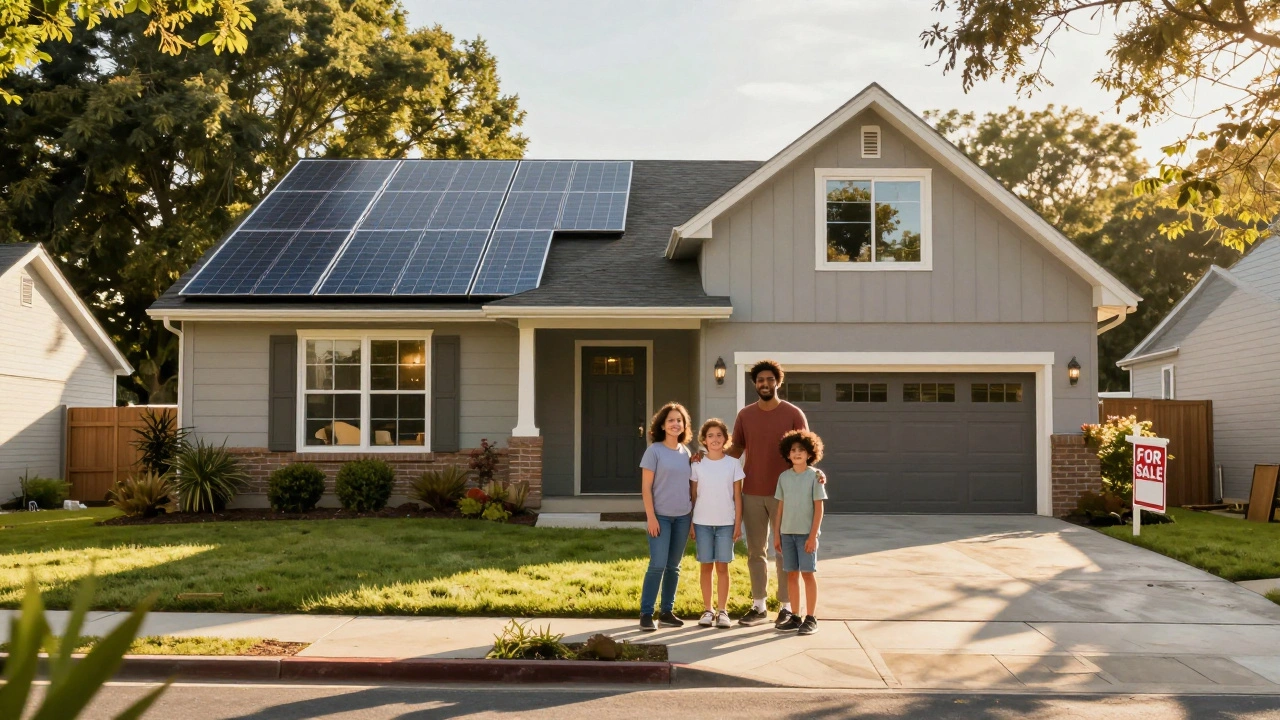
Buying a home isn’t just about finding a place to live-it’s one of the biggest financial decisions most people make. In 2025, the residential real estate market is shifting faster than ever. Interest rates are stabilizing after years of volatility, inventory is slowly rising in suburban areas, and remote work continues to reshape what people look for in a house. If you’re thinking about buying or investing, here’s what actually matters right now.
What Exactly Is Residential Real Estate?
Residential real estate includes any property designed for people to live in. That means single-family homes, townhouses, condos, duplexes, and even small apartment buildings with four units or fewer. It doesn’t include commercial buildings, warehouses, or large apartment complexes with five or more units-that’s considered commercial real estate.
Unlike commercial properties, which generate income through leases to businesses, residential properties are rented out to individuals or families. The value of a residential property usually comes from two things: how much someone is willing to pay to live there, and how much it can earn in rent if you’re not living in it yourself.
In 2025, the average U.S. home price sits at around $420,000, according to the National Association of Realtors. That’s up 12% from 2020 but down 5% from the 2022 peak. Prices vary wildly by region. A three-bedroom home in Austin might cost $550,000, while the same layout in Cleveland runs closer to $180,000.
Why People Buy Residential Property
Some people buy homes because they want stability. Owning means no landlord can raise your rent or kick you out. Others buy to build equity-every mortgage payment builds ownership. And then there are investors who treat homes like stocks: buy low, rent out, sell high.
According to a 2024 survey by Zillow, 68% of first-time buyers said they wanted to stop paying rent. Another 22% said they were buying to rent out later. Only 10% cited tax benefits as their main reason, which shows most people aren’t buying for deductions-they’re buying for lifestyle and long-term security.
There’s also a psychological factor. People who own their homes report higher levels of life satisfaction than renters, even after controlling for income. That’s not just about pride-it’s about control. You can paint the walls, plant a garden, or knock down a wall without asking anyone’s permission.
What Drives Home Prices Today?
Three big things control residential real estate prices: supply, interest rates, and buyer demand.
Supply is still tight in many cities. After the pandemic, builders focused on luxury homes and multi-family units, leaving a gap in affordable, single-family housing. The U.S. is still short about 3.8 million homes, according to Harvard’s Joint Center for Housing Studies. That shortage keeps prices high, even when demand cools.
Interest rates are the silent driver. In 2023, 30-year mortgage rates hit 7.8%. By late 2025, they’ve settled around 6.1%. That might not sound like much, but it makes a huge difference. A $400,000 home at 7.8% costs $2,900 a month. At 6.1%, it’s $2,400. That $500 difference puts homes back in reach for tens of thousands of buyers.
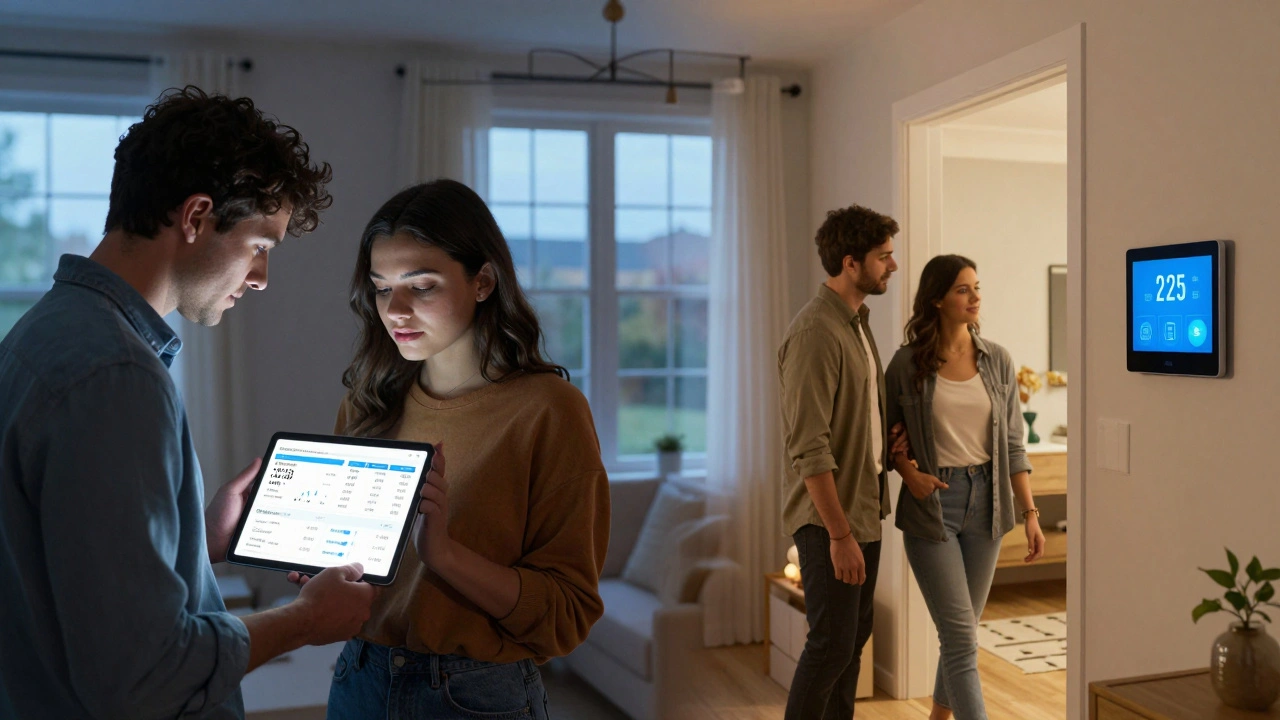
Demand is changing too. Younger buyers-Gen Z and millennials-are prioritizing walkability, home offices, and energy efficiency. They’re less interested in big backyards and more interested in proximity to coffee shops, bike lanes, and public transit. In cities like Portland, Denver, and Nashville, homes with solar panels and smart thermostats sell 22% faster than those without.
How to Know If You’re Ready to Buy
There’s no perfect time to buy, but there are signs you’re prepared.
- You’ve saved at least 10% for a down payment (20% avoids private mortgage insurance)
- Your credit score is above 680 (most lenders require this for the best rates)
- Your monthly debt payments (car loans, student loans, credit cards) don’t exceed 36% of your gross income
- You plan to stay in the home for at least five years
Why five years? Because closing costs, realtor fees, and taxes eat up 5-8% of the home’s value when you sell. If you move too soon, you might not recoup what you spent.
Also, don’t stretch to the max. Just because a bank says you can afford $500,000 doesn’t mean you should. Look at your budget after taxes, groceries, gas, and emergencies. A home should feel like security-not a burden.
Investing in Residential Real Estate
If you’re not planning to live in the property, you’re an investor. The goal here is cash flow and appreciation.
Start by looking at the rent-to-price ratio. Divide the annual rent by the purchase price. A ratio of 1% or higher is good. For example, a $300,000 home renting for $3,000 a month gives you a 1.2% ratio. That’s solid. At $2,000 a month, you’re at 0.8%-risky.
Location matters more than the house. A well-maintained 1970s ranch in a growing neighborhood with good schools will outperform a brand-new luxury condo in a stagnant area. Look for towns with job growth, low crime, and rising population. Places like Raleigh, NC; Boise, ID; and Tampa, FL have seen steady demand over the last five years.
Don’t forget expenses. Property taxes, insurance, maintenance, and vacancies eat into profits. A good rule of thumb: assume 40% of your rent will go to costs. That means if you collect $3,000, you should plan to spend $1,200 on upkeep, taxes, and downtime.
Many investors start with a duplex. Live in one unit, rent out the other. That way, your tenant helps pay your mortgage. It’s a common entry point for people who want to build wealth without needing a huge down payment.
Pitfalls to Avoid
Even smart people make mistakes.
- Buying based on emotion. That house with the sunroom and the big backyard? If it’s 45 minutes from your job and needs a new roof, it’s not a bargain-it’s a trap.
- Skipping inspections. A $500 inspection can save you $20,000 in hidden repairs. Always get a structural, plumbing, and electrical check.
- Ignoring neighborhood trends. A nice home next to a planned highway or industrial zone can lose value fast.
- Thinking you’ll flip it quickly. The average home sits on the market for 42 days in 2025. If you’re counting on a quick sale, you’re gambling.
Also, avoid buying in areas with high HOA fees unless you understand what they cover. Some HOAs charge $300 a month for basic lawn care and a pool. That’s more than your mortgage in some markets.
What’s Next for Residential Real Estate?
By 2027, experts predict the U.S. will add 1.2 million new homes a year-up from 1.4 million in 2024. That’s still not enough to catch up to demand, but it’s the fastest pace in 20 years.
Technology is changing things too. More buyers are using AI tools to analyze neighborhood safety, school ratings, and future development plans. Apps like Redfin and Zillow now show projected price trends based on local job growth and transit projects.
Green homes are becoming the norm. Homes with energy-efficient windows, solar panels, and smart HVAC systems sell for 5-7% more than comparable homes without them. In California and Colorado, buyers are even willing to pay extra for homes with rainwater harvesting systems.
The biggest shift? Buyers are no longer chasing the biggest house. They want the right house. One that fits their life-not their parents’ dream.
Is now a good time to buy a home in 2025?
Yes, for many buyers. Mortgage rates have dropped from 7.8% to around 6.1%, making monthly payments more affordable. Inventory is slowly improving, especially in mid-sized cities. If you have a solid down payment, good credit, and plan to stay for at least five years, 2025 offers one of the best entry points since 2019.
How much should I save before buying a home?
Aim for at least 10% of the home’s price for a down payment. For a $350,000 home, that’s $35,000. You’ll also need extra for closing costs (2-5%), inspections, moving expenses, and a buffer for repairs. Most experts recommend having 3-6 months of living expenses saved on top of your home-buying budget.
Should I buy a fixer-upper or a move-in-ready home?
It depends on your skills and budget. Fixer-uppers are cheaper upfront but often cost 20-30% more in repairs. If you’re handy and have time, they can be a great investment. If you’re busy or new to homeownership, a move-in-ready home reduces stress and unexpected bills. Always get a professional inspection before deciding.
Can I invest in residential real estate with little money?
Yes, but it’s harder. Options include FHA loans (3.5% down), VA loans (0% down for veterans), or buying a duplex and living in one unit. Some investors use creative financing like seller financing or partnering with someone. But be cautious-low down payments mean higher monthly payments and less equity. Start small, do the math, and avoid over-leveraging.
What’s the difference between a home and an investment property?
A home is where you live. An investment property is bought to generate income or profit. Lenders treat them differently: investment loans usually require higher down payments (20-25%) and have higher interest rates. You also can’t claim the primary residence tax exemption if you rent it out. If you plan to live in it for a few years then rent it, that’s called a "live-in flip"-a smart strategy for building equity.
Next Steps
Start by checking your credit score. Get a free report from AnnualCreditReport.com. Then, talk to a local real estate agent who knows your target neighborhood-not just any agent. Ask them about recent sales, days on market, and how many homes are under contract.
Use online tools like Zillow’s Zestimate or Redfin’s Estimate to get a ballpark, but don’t rely on them. They’re averages. What matters is what similar homes actually sold for in the last 90 days.
If you’re investing, visit the neighborhood at different times of day. Talk to neighbors. Check if the local school district is improving. Look up city planning maps-new parks or transit lines can boost values. Don’t rush. The best deals aren’t the first ones you see-they’re the ones you’ve thought about for weeks.
9 Responses
bro i just looked at a house and the fridge was older than my dog. why do people think they need to buy right now? i’m renting and i eat ramen every night but at least i don’t have to fix a leaky roof.
Let me just say this-again-with punctuation, because apparently some people need it spelled out: buying a home isn't a 'get rich quick' scheme. It's a 30-year commitment with maintenance, HOA fees, and property taxes that will quietly drain your soul. And if you think 'solar panels' make you a green hero, you're deluding yourself. Most of them are subsidized by the government, and the payback period? Longer than your last relationship. And don't even get me started on Zillow estimates-they're basically astrology with a spreadsheet.
Also, 'move-in ready'? That’s just code for 'someone else already paid for the upgrades you can't afford.' And yes, I’ve seen the same house listed twice in three months with a $40K price jump. The market isn’t stable-it’s a rigged casino with a 6.1% interest rate as the house edge.
Let’s be real-the entire housing narrative is a manufactured crisis. Developers hoard land. Banks profit from leverage. Governments incentivize ownership to suppress wage demands. You think you’re building equity? You’re just funding someone else’s retirement fund. The real asset isn’t the house-it’s the people who own the construction companies. And don’t even mention ‘rent-to-price ratio’-that’s a metric designed for finance bros who’ve never changed a lightbulb.
It’s never too late to start building something solid. Even if you can only afford a small place now, owning it gives you a foundation. Many of us started with less than you think. Patience and consistency matter more than timing.
What is a home, really? Is it the square footage? The number of bathrooms? Or is it the quiet morning light on the kitchen floor, the smell of coffee before the world wakes up, the space where you finally stop pretending? We treat housing like a stock portfolio, but it’s not-it’s the vessel for our humanity. We forget that until the roof leaks, or the neighbor’s dog barks at 3 a.m., or you realize you’ve spent five years paying for a box that doesn’t feel like yours.
Maybe the real question isn’t ‘Is now a good time to buy?’ but ‘Do you want to belong somewhere-or just own something?’
Ugh. Another ‘buy now’ guide. Look, I’ve got a 1-bedroom apartment and I’m fine. Why would I trade my freedom for a mortgage? I’ve seen people cry over basement cracks. Don’t be one of them.
If you’re reading this and wondering if you’re ready to buy-ask yourself: Do you want this for yourself, or because you think you’re supposed to? Society tells us homeownership equals success, but real security comes from knowing you can adapt, no matter where you live. If you can save 10%, have a stable income, and don’t need to renovate the entire house to feel at peace-you’re already ahead of most. Don’t compare your chapter two to someone else’s chapter ten.
And if you’re investing? Don’t treat people like tenants. Treat them like neighbors. The best returns come from care, not corners.
How quaint. You all speak of ‘affordability’ and ‘equity’ as if these are moral virtues rather than symptoms of a deeply broken system. The fact that you think 6.1% is ‘low’ reveals your privilege. My cousin in Phoenix pays 80% of her income on rent in a 500-square-foot studio with mold in the bathroom. And you’re debating whether to buy a ‘move-in-ready’ home? The real crisis isn’t inventory-it’s that we’ve normalized housing as a commodity instead of a right. Also, solar panels? Please. They’re a performative gesture for the upper-middle class who still have a 401(k) to fall back on.
And let’s not pretend the ‘rent-to-price ratio’ is neutral-it’s a tool designed to extract wealth from those who can’t afford to play. The only way to win is to stop playing. But then again, you probably own your home in a gated community with a HOA that bans political signs. So, carry on.
Thank you for the thoughtful breakdown-it’s rare to see someone lay out the real costs without sugarcoating. I’ve been renting for seven years and I finally saved enough for a down payment on a duplex. I’m nervous, but I’m doing it. One thing I learned: don’t just look at the numbers. Walk the neighborhood at night. Talk to the mail carrier. Ask the local barista if the area’s getting safer. Real estate isn’t just math-it’s community.
To anyone scared to start: you don’t need to be perfect. You just need to be ready to learn. And if you mess up? You’ll still be better off than if you never tried.