
Buying or selling a home isn’t just about finding the right house or getting the best price. Behind every real estate deal is a web of legal documents, hidden risks, and rules that can trip up even the most prepared buyer or seller. That’s where a real estate lawyer comes in. They don’t just sign papers-they protect your money, your rights, and your future ownership.
What Exactly Does a Real Estate Lawyer Do?
A real estate lawyer handles the legal side of buying, selling, or leasing property. Their job isn’t glamorous, but it’s critical. Think of them as the insurance policy for your biggest financial transaction.They review and draft contracts. They check the property’s title history to make sure no one else has a claim to it. They handle the closing process, making sure all fees are paid, taxes are settled, and deeds are filed correctly. In some states, they even conduct the closing themselves. In others, they work alongside title companies and agents.
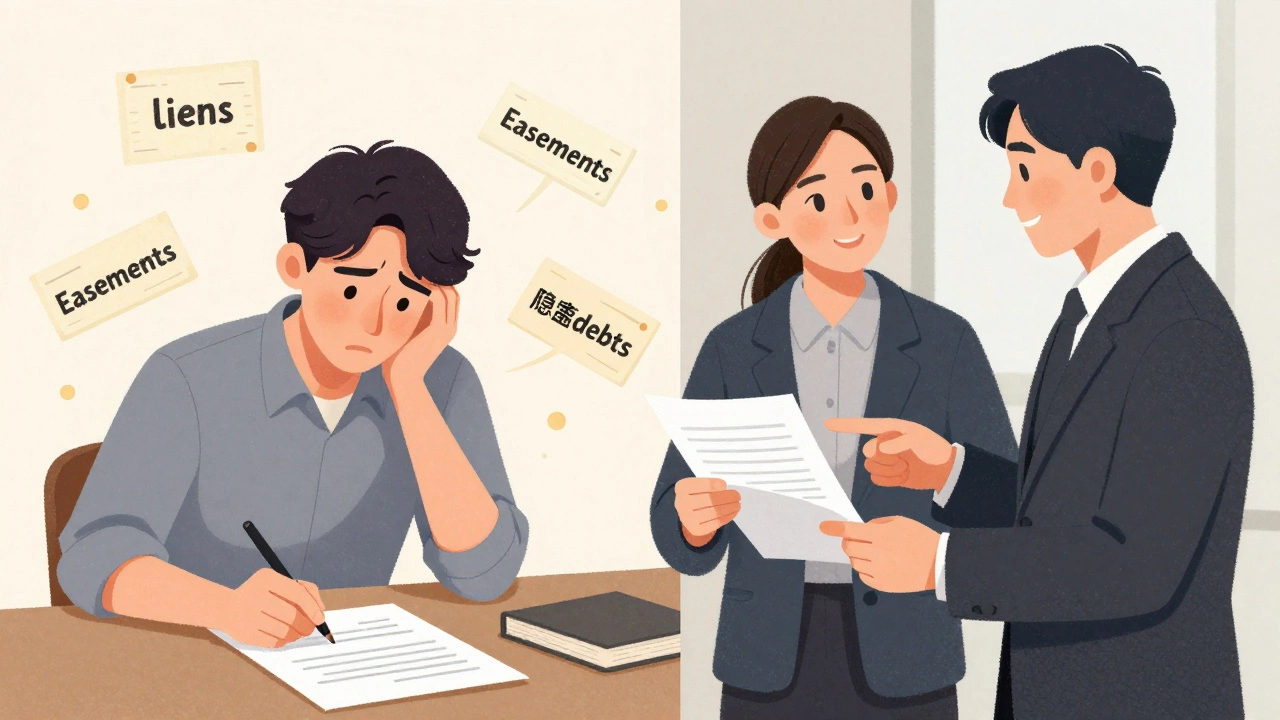
For example, if the seller didn’t pay their property taxes last year, the lawyer will find out before you close. If the property has an old easement that lets a neighbor use part of your driveway, they’ll explain what that means for you. These aren’t small details-they can cost you thousands or even your ownership if ignored.
When Do You Actually Need One?
Many people think they don’t need a lawyer for a standard home sale. That’s a myth. You might not need one in every state, but you should still consider it.You definitely need a real estate lawyer if:
- You’re buying a foreclosure or short sale-these come with legal baggage like unpaid liens or unclear ownership.
- The property has a shared well, driveway, or fence line-these often involve easements or neighbor agreements that need legal review.
- You’re buying commercial property-leases, zoning laws, and environmental regulations get complicated fast.
- You’re dealing with a divorce or inheritance that affects ownership-courts often require legal documentation to transfer property.
- The contract has unusual terms, like seller financing or rent-to-own arrangements.
Even in states where lawyers aren’t required, like California or Texas, over 60% of high-value transactions involve legal counsel. Why? Because mistakes are expensive. A single typo in a deed can delay closing for months. A missed lien can leave you responsible for someone else’s debt.
Real Estate Lawyer vs. Title Company
People often confuse real estate lawyers with title companies. They both handle closings, but their roles are different.A title company’s job is to issue title insurance. They search public records to find past ownership issues and then insure you against those risks. But they don’t give legal advice. They can’t tell you if a contract term is unfair or if a zoning rule will stop you from building a shed.
A real estate lawyer can. They interpret the law, negotiate changes to contracts, and represent your interests in disputes. If a seller refuses to fix a disclosed issue, your lawyer can demand a price reduction or walk away on your behalf.
Some states, like New York and Florida, require a lawyer to be present at closing. In others, like Arizona, you can close without one-but you’re still on the hook for every mistake in the paperwork.
How Much Does a Real Estate Lawyer Cost?
Fees vary by location and complexity. For a standard residential sale or purchase, expect to pay between $750 and $2,000. In major cities like New York or San Francisco, it can go higher.Some lawyers charge a flat fee. Others bill by the hour-usually $200 to $400 per hour. The more complex the deal, the more time they’ll spend. A simple condo purchase might take 3 hours. A multi-unit rental property with tenant leases could take 15 hours or more.
Don’t shop based on price alone. A $500 lawyer might miss a critical issue that costs you $20,000 later. Look for someone who specializes in real estate and has handled at least 50 transactions in the past year. Ask for references from past clients.
What to Ask Before Hiring One
Not all real estate lawyers are the same. Here’s what to ask before you sign anything:- How many real estate closings have you handled in the last year?
- Do you work with buyers, sellers, or both? (Some only represent one side.)
- Will you review the purchase agreement before I sign it?
- Do you handle title issues, or do I need to hire someone else?
- What’s your fee structure? Is there a cap?
Also, ask if they’ve dealt with your specific situation. If you’re buying a historic home, find someone who’s handled old deeds and preservation restrictions. If you’re a first-time buyer, make sure they explain terms like “title insurance” and “escrow” in plain language.
Common Mistakes People Make
Most people wait until the last minute to call a lawyer. That’s risky. You should contact one as soon as you sign a purchase agreement-or even before.Here are the top three mistakes:
- Signing a contract without legal review. Many standard forms favor the seller. A lawyer can add clauses that protect you, like a contingency for a home inspection or financing.
- Assuming the title is clean. A title search might miss a forgotten inheritance claim or a mechanic’s lien from a previous renovation.
- Letting the seller’s lawyer handle everything. That’s a conflict of interest. Their job is to protect the seller-not you.
One client in Ohio thought they were saving money by skipping a lawyer. Three months after closing, they got a bill for $18,000 in unpaid property taxes from a prior owner. The title company’s insurance didn’t cover it because the lien wasn’t recorded properly. The lawyer they hired afterward couldn’t undo it-only fight it in court.
What to Bring to Your First Meeting
To make your meeting efficient, come prepared:- A copy of the purchase agreement or listing contract
- The property address and legal description (found in the deed or listing)
- Any inspection reports or disclosures you’ve received
- Proof of financing (loan approval letter or pre-approval)
- Questions about zoning, HOA rules, or future plans for the property
Don’t worry if you don’t have all the documents. A good lawyer will tell you what’s needed and help you get it.
Can You Handle It Without One?
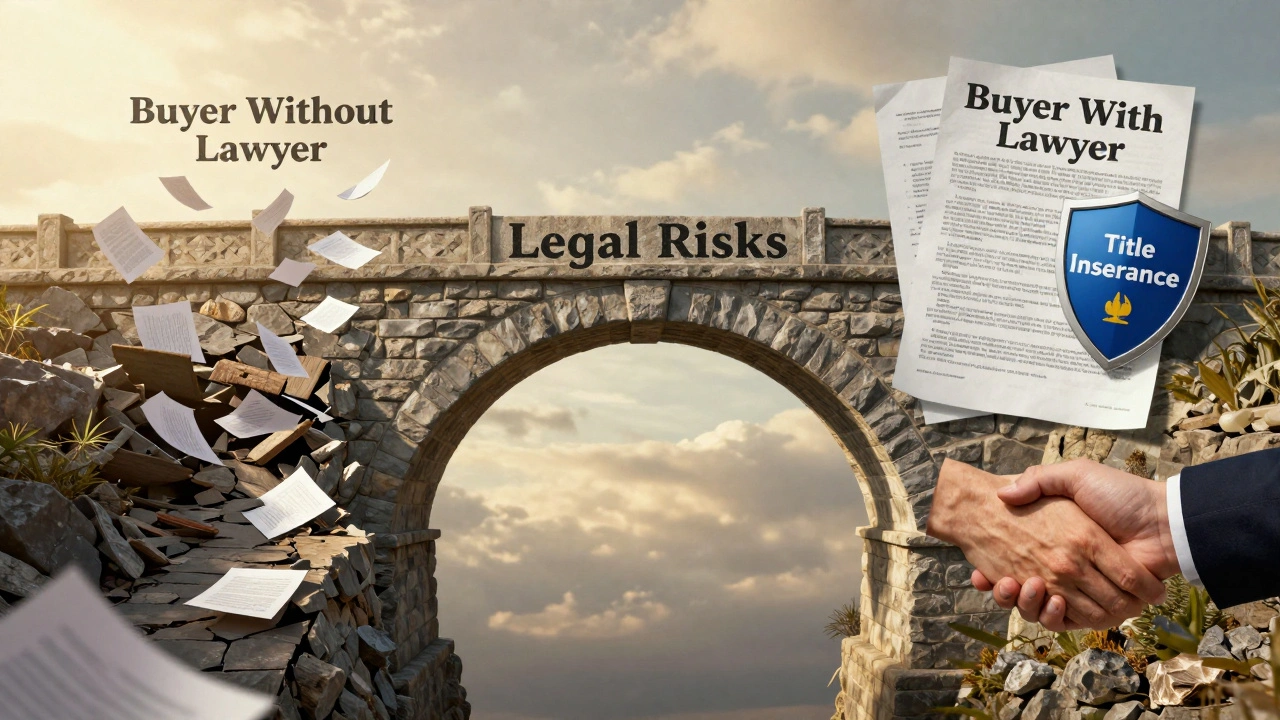
Yes, technically. In many states, you can close a residential sale without a lawyer. But you’re taking on all the risk.Real estate contracts are written in legal language. One clause can change your rights. For example, a “time is of the essence” clause means missing a deadline by one day can void your contract. A lawyer spots these traps. You won’t.
And if something goes wrong after closing-like a boundary dispute or an undisclosed environmental hazard-you can’t just call the title company for help. You need a lawyer to file a claim or sue.
Think of it like skipping a car inspection. You might save $100 now. But if the engine fails six months later, you’re out thousands.
Real Estate Lawyer and Other Professionals
A real estate lawyer doesn’t work alone. They’re part of a team:- Real estate agent: Finds the property and negotiates the price. They don’t give legal advice.
- Title company: Handles the closing paperwork and issues title insurance.
- Home inspector: Checks the physical condition of the house.
- Mortgage lender: Provides the loan.
Your lawyer coordinates with all of them. They make sure the inspection contingency is written correctly. They confirm the lender’s documents match the contract. They ensure the title insurance covers what you think it does.
Without a lawyer, you’re left to connect the dots yourself-and that’s where things fall apart.
Final Thoughts
A real estate lawyer isn’t a luxury. It’s a necessity for anyone who wants to own property without surprises. The cost is small compared to the risk of losing your investment over a hidden lien, a bad contract, or a zoning violation.Don’t wait until closing day to call one. Reach out early. Ask questions. Get clarity. Your future self will thank you.
Do I really need a real estate lawyer if my state doesn’t require one?
Yes. Even in states where lawyers aren’t mandatory, over half of homebuyers hire one for high-value or complex deals. The legal risks-like undisclosed liens, faulty deeds, or unenforceable contracts-are too big to ignore. A lawyer protects your ownership rights, not just your paperwork.
Can a real estate lawyer help with commercial property?
Absolutely. Commercial real estate involves leases, zoning laws, environmental regulations, and tenant rights-all areas where legal expertise is essential. A residential lawyer may not have the right experience, so look for someone who specializes in commercial transactions.
How long does a real estate lawyer take to review a contract?
Most standard residential contracts take 1-3 business days to review. Complex deals-like those with seller financing, multiple owners, or commercial elements-can take a week or more. Always ask for a timeline upfront.
What’s the difference between a real estate lawyer and a notary?
A notary only witnesses signatures and verifies identity. They don’t review documents, give legal advice, or interpret contracts. A real estate lawyer does all of that. You might need both at closing, but only the lawyer protects your legal rights.
Can I use the same lawyer as the seller?
Technically yes, but it’s a bad idea. Lawyers can’t represent both sides in a real estate deal-it’s a conflict of interest. The seller’s lawyer works for the seller. You need your own to protect your interests. Never assume they’re neutral.
12 Responses
Just wanted to say this is one of the clearest explanations I’ve ever read on real estate law. I’m a first-time buyer and was terrified of signing anything without understanding it - this broke it down like I was 10 and still made sense. Thank you.
I skipped a lawyer in 2021 and got burned by an old easement no one told me about. Now I tell everyone: if you’re not hiring one, you’re just gambling with your down payment.
The article contains several grammatical inconsistencies. For instance, the phrase 'they don't just sign papers-they protect your money' lacks proper punctuation after the dash. Additionally, the inconsistent use of serial commas in lists reduces clarity. A well-structured document demands precision.
Frankly, I find it deplorable that people still entertain the illusion that title companies are sufficient. The entire system is a corporate facade designed to extract fees while leaving buyers vulnerable. Real estate law is a labyrinth of predatory clauses, and only a lawyer with true fiduciary duty can navigate it. Most so-called 'experts' are just glorified clerks.
i mean like i totally get what ur saying but honestly why do we even need lawyers at all? like my cousin bought a house in hyderabad and they just did everything online with a notary and it was fine?? like why pay 2k when u can just google and be done?? also i think the whole thing is just a scam to make lawyers rich tbh i mean come on its just papers right??
There’s a quiet truth here that most people miss: real estate isn’t about property - it’s about trust. The lawyer isn’t just reviewing documents; they’re standing between you and a system that has no incentive to be fair. Every clause, every lien, every easement - they’re all echoes of past human failures. The lawyer is the one who remembers what the system forgot.
Let me tell you something - this whole thing about real estate lawyers? It’s not about contracts or deeds or liens. It’s about power. Who holds the pen? Who gets to write the story of your home? The bank? The seller? The title company? No. It’s the lawyer. The quiet one in the room with the briefcase. They’re the last line between you and becoming a footnote in someone else’s financial fairy tale. And if you think that’s not worth $2,000… you’ve never lost everything.
Don’t wait till closing. Call the lawyer the moment you sign the offer. Seriously. One day can cost you everything.
Why do we even need lawyers? In India we handle everything through local agents and panchayats. Why import this western bureaucracy? This is just another way to make Indians pay more for the same thing. The system is rigged to keep us dependent on expensive professionals. We need to build our own way.
Let’s be real - the whole real estate system is a controlled demolition. Title companies are fronts for shadow entities that bury liens in obscure county records. Lawyers? They’re just the hired actors who pretend to protect you while the real players - banks, developers, and politicians - write the script. If you think your lawyer is on your side, you’re the mark. The system doesn’t want you to know this. That’s why they call it 'due diligence.' It’s not diligence. It’s distraction.
i read this whole thing and honestly i think its overkill. i mean i know people who bought houses with just a notary and never had any issues. also why do they charge so much? like 2000 dollars?? i could get a whole new fridge for that. and what if the lawyer makes a mistake? who pays then? also the part about 'trust' is just emotional manipulation. its just paperwork.
What struck me most was how this mirrors the architecture of trust in modern society - we outsource our security to experts because we’ve lost the ability to read the fine print ourselves. A real estate lawyer doesn’t just interpret law - they translate power. They turn abstract legal structures into something a human can understand. And in a world where contracts are weaponized, that’s not a service - it’s a lifeline. I’ve seen people save hundreds of thousands by catching a single clause. But the real value? Peace of mind. You don’t know you need it until you’re standing in a courtroom with no lawyer, wondering how a comma cost you your home.