
Most people think a real estate broker is just another name for a real estate agent. But that’s not true. A real estate broker does more. They hold a higher license. They can run their own agency. They hire and train agents. And if you’re buying or selling a home, knowing the difference could save you time, money, and stress.
What’s the Difference Between a Broker and an Agent?
Every real estate broker was once an agent. But not every agent becomes a broker. To get licensed as a broker, you need more than just passing a basic exam. You need at least two to three years of active experience as a licensed agent-depending on your state. Then you take a harder exam, often called the broker’s license test. It covers legal responsibilities, contract law, fiduciary duties, and managing other agents.
Once licensed, a broker can work independently. They don’t have to answer to another broker. They can open their own office. They can sign contracts directly with clients. Agents, on the other hand, must work under a broker. Their commissions are paid to the broker, who then splits them. That’s why you’ll often see a brokerage name like "Smith & Co. Real Estate" on signs and websites.
Why It Matters When You’re Buying or Selling
If you’re selling your home, you might be tempted to pick the agent who promises the highest price. But here’s what most people miss: the broker behind that agent controls the listing strategy, marketing budget, and team support. A good broker invests in professional photography, virtual tours, targeted Facebook ads, and MLS optimization. A weak broker might just slap a sign on the lawn and call it a day.
For buyers, working with a broker means you’re dealing with someone who has direct access to off-market listings. Many homes never hit the MLS. They’re sold through broker networks-private deals between agents and their clients. If your agent works under a broker with strong industry connections, you get first crack at those homes before they’re even listed publicly.
How Brokers Build Their Teams
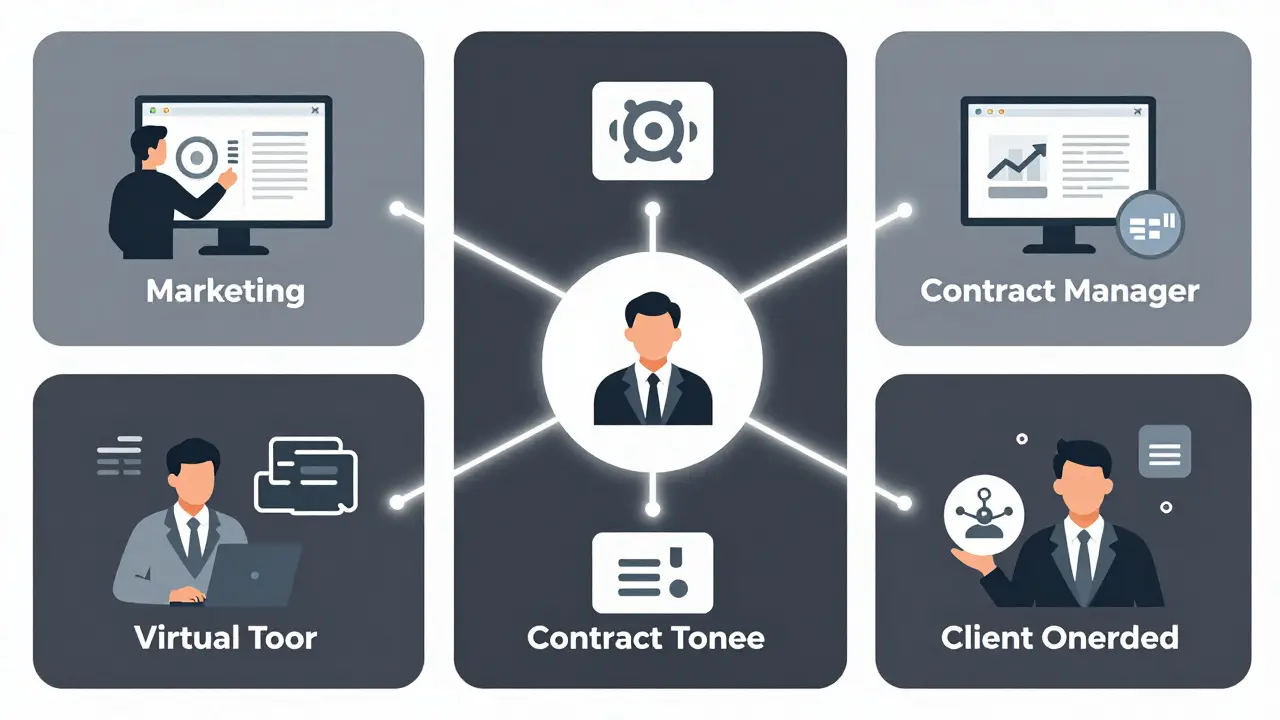
Most successful brokers don’t work alone. They build teams. You might think you’re working with one agent, but behind them could be a transaction coordinator, a marketing specialist, a contract manager, and a client onboarding assistant. A broker who runs a team can handle more clients, respond faster, and reduce errors.
For example, in Boulder, a top broker might have five agents under them. Each agent handles 15-20 clients a year. But the broker’s team processes over 100 transactions annually. That means when you’re in escrow, someone is always on it-weekends included. You’re not relying on one person’s availability.
What to Look for When Choosing a Broker
Not all brokers are equal. Here’s what actually matters:
- Years licensed as a broker-not just as an agent. Look for at least five years.
- Number of transactions closed last year-ask for their stats. A broker closing 50+ homes a year is likely running a real operation.
- Specialization-do they focus on luxury homes? First-time buyers? Investors? Pick someone who knows your type of deal.
- Technology use-do they use CRM tools? Digital signatures? Automated market reports? Tech-savvy brokers move faster.
- Client reviews-read reviews from past buyers and sellers, not just the ones on their website. Look for patterns: Do people mention communication? Responsiveness? Problem-solving?
A broker who’s been in business for ten years and still has a 95% client satisfaction rate isn’t lucky. They’ve built systems. They’ve trained their team. They’ve learned what goes wrong-and how to fix it before it happens.

Red Flags to Watch Out For
Watch out for brokers who:
- Don’t have an office or physical address (just a P.O. box or virtual address)
- Refuse to show you their license number (you can verify it on your state’s real estate commission website)
- Promise guaranteed sale prices without a comparative market analysis
- Ask you to sign a contract without explaining the terms
- Only work with one lender or title company-they’re getting kickbacks
One broker in Colorado got fined $25,000 last year for steering clients to a specific title company in exchange for referral fees. That’s illegal. And it’s not rare. Always ask: "Are you receiving any compensation from the lenders or title companies you recommend?"
How Brokers Make Money
Brokers don’t get paid directly by buyers. They earn through commissions on sales. The standard is 5-6% of the sale price, split between the buyer’s and seller’s agents. The broker takes a cut of their agents’ earnings-usually 30-70%, depending on the agreement.
Some brokers offer a flat fee model. These are rare, but they exist. For example, a broker might charge $3,000 to list your home and handle all paperwork, while you do the showings yourself. This works for experienced sellers who want to save money but still need legal protection.
Bottom line: You’re not paying a broker to be your friend. You’re paying for expertise, systems, and accountability.
How to Verify a Broker’s Credentials
Every state has a real estate commission. In Colorado, it’s the Colorado Division of Real Estate. Go to their website and search by name or license number. You’ll see:
- When they got licensed
- Whether their license is active
- Any disciplinary actions
- Education history
If their license shows "inactive," they’re not legally allowed to work. If they’ve had complaints filed against them, those will show up too. Don’t skip this step. It takes five minutes.
What Happens When a Broker Leaves a Firm
Brokers can switch firms. But when they do, their agents often go with them. That’s because agents are tied to the broker’s license, not the company name. If your agent suddenly moves to a new office, your listing or buyer contract doesn’t automatically transfer. You need to sign new paperwork.
Some brokers use this as a tactic-luring agents away from competitors to build their own team. If your agent says they’re "joining a better firm," ask: "Will this change how my deal is handled?" If they hesitate, dig deeper.
When to Work Directly With a Broker
You don’t need to work with a broker directly. But there are times it makes sense:
- You’re buying a multi-family property or commercial space
- You’re selling a high-value home ($1M+)
- You’ve had bad experiences with agents before and want direct accountability
- You’re an investor and need access to off-market deals
In these cases, you’re not just hiring someone to show you houses. You’re hiring a strategist who understands contracts, zoning laws, financing structures, and market timing. That’s the value a broker brings.
Final Thought: It’s About Systems, Not Just Personality
People choose agents because they like them. That’s fine. But personality doesn’t pay your closing costs. Systems do. A broker with a team, a CRM, a marketing budget, and a track record of closing deals faster than the market average is worth more than the charming agent who forgets to send the inspection report on time.
Don’t just ask, "Do you like me?" Ask, "What’s your process? How many deals do you close each year? Who handles my paperwork? What happens if you’re on vacation?" The answers will tell you everything you need to know.
Is a real estate broker better than an agent?
A broker has more training, can run their own business, and often leads a team. That means more resources, better systems, and faster service. But an agent can still do an excellent job-especially if they’re part of a strong brokerage. The key is not the title, but the support behind them.
Can a real estate broker work alone?
Yes. Many brokers work independently, especially in smaller markets. But most successful ones build teams because handling 50+ transactions a year alone isn’t realistic. Working with a solo broker means you deal directly with them, which can be good for personal attention-but risky if they’re overwhelmed.
Do brokers charge more than agents?
No. The commission rate is set by the market, not by whether the agent works under a broker. Buyers don’t pay extra for a broker. The commission is split between the buyer’s and seller’s agents, and the broker takes a percentage of their agent’s earnings. You won’t see a higher fee on your closing statement.
How do I find a reputable real estate broker?
Check your state’s real estate commission website for active licenses and disciplinary records. Ask for their transaction volume over the past year. Look for brokers who specialize in your type of property. Read reviews on Google and Zillow-not just their website. And never sign anything without understanding the terms.
Can I switch brokers mid-transaction?
Technically, yes-but it’s complicated. If you signed a buyer’s agreement with an agent, you’re tied to their brokerage. To switch, you’d need to terminate that agreement, which may require mutual consent. If your agent moves to a new firm, your contract doesn’t automatically transfer-you’ll need to re-sign with the new broker. Always read your contracts carefully before signing.
14 Responses
Brokers? More like middlemen who charge 6% so they can buy another yacht. I sold my house last year and the 'broker' was on vacation for 3 weeks. The agent did all the work. Pay the agent, skip the middleman.
Honestly, this post is spot on. I didn't know brokers could access off-market listings until I bought my first home. My agent's broker had a whole network-found me a place before it hit Zillow. Total game changer.
America needs real estate reform. These brokers are just rent-seekers. In Germany, you list directly with the city. No 6% rip-off. Why are we letting this continue?
Brokers are the backend ops of real estate. If you're buying a $1.2M home, you want someone who’s got CRM automation, a dedicated transaction coordinator, and a marketing team. It’s not about personality-it’s about infrastructure. If your agent doesn’t have a team, you’re flying solo in a 747.
I would like to extend my sincere appreciation for this exceptionally well-researched and meticulously articulated exposition on the distinctions between real estate agents and brokers. The emphasis on systems over charisma is not merely astute-it is imperative in an industry rife with transactional opacity.
I’ve been in real estate for 12 years and I’ve seen brokers come and go. What matters most is whether they’ve built processes that outlast them. If you’re asking if your agent’s broker is good, ask: 'Who handles my file when they’re on vacation?'
You spelled 'MLS' correctly. And you used proper capitalization. And you didn't say 'real estate agent' when you meant 'broker.' I'm impressed. This is the best real estate post I've read in years.
I’ve worked with both. The broker I dealt with was great, but I never met them. I worked with their agent. I didn’t care who signed the check as long as the house sold on time.
In India, we don’t have brokers like this. Agents work directly. No team, no fancy CRM. Just a guy with a phone and a car. But people still buy homes. Maybe the system isn’t broken, just different.
Let’s be real-90% of these 'brokers' are glorified salesmen who passed a test in 2015 and now charge $200/hour to say 'the market is hot.' If you're not closing 100 deals a year, you're not a broker-you're a hobbyist with a license and a LinkedIn profile.
I HATE BROKERS. My agent left the firm and my entire deal got stuck for 3 weeks because the broker was 'on vacation.' I had to call the state commission. I cried. I lost my deposit. This isn’t real estate. It’s a soap opera.
You said 'commission is split between buyer’s and seller’s agents.' That’s wrong. The commission is paid by the seller. The buyer’s agent gets a portion of it. Stop spreading misinformation. You’re not helping anyone.
i just want to say i learned so much from this. i thought brokers were just fancy agents. turns out they’re like the CEOs of real estate teams. also i misspelled 'broker' like 5 times in my notes. oops.
I used to think personality mattered most until my broker’s team caught a typo in my contract that saved me $12k. Systems > charm. Always.