
A real estate firm isn’t just a group of agents working under one roof. It’s a full-service business built to handle every step of buying, selling, renting, or managing property. In 2025, the best firms don’t just list homes-they use data, tech, and local expertise to move deals faster and with less stress for clients.
What Exactly Does a Real Estate Firm Do?
A real estate firm acts as the engine behind property transactions. It hires licensed agents, provides them with tools, marketing support, and legal backing, and takes a cut of each commission. But the best firms do more than collect fees. They train agents, manage client relationships, handle contracts, coordinate inspections and appraisals, and even help with financing options.
Think of it like a small business that sells houses instead of shoes. One agent might focus on first-time buyers in suburban neighborhoods. Another might specialize in luxury condos downtown. The firm ties them together under one brand, one website, one CRM system, and one set of standards.
How Is a Real Estate Firm Different From a Solo Agent?
Many people think hiring a real estate agent means working with just one person. But if that agent works for a firm, you’re not just getting them-you’re getting their entire team. A solo agent might be great at showing homes, but what happens when they’re sick, on vacation, or overwhelmed with deals?
A real estate firm has backups. If your agent is tied up in a closing, someone else from the office can answer your questions. They have access to shared listings, marketing teams that design professional photos and videos, and legal staff who review contracts before you sign. A solo agent might not have the budget for drone footage or targeted Facebook ads. A firm does.
According to the National Association of Realtors, 87% of buyers in 2025 used an agent affiliated with a firm. Only 13% went with independent agents. Why? Because firms deliver consistency. They don’t rely on one person’s availability or skill level.
What Services Do Real Estate Firms Offer?
Not all firms are the same. Some are full-service. Others are discount or tech-driven. Here’s what you can expect from a typical firm in 2025:
- Property listing and marketing - Professional photos, virtual tours, MLS entry, social media campaigns
- Buyer representation - Helping you find homes that match your budget, location, and needs
- Negotiation support - Handling offers, counteroffers, and contingencies
- Transaction management - Coordinating inspections, appraisals, title work, and closing dates
- Rental management - Finding tenants, collecting rent, handling repairs (offered by some firms)
- Investment consulting - Analyzing cash flow, ROI, and market trends for rental properties
Some firms even offer in-house mortgage brokers or home warranty partners. Others partner with local contractors for quick repairs before a sale. The more services they bundle, the more value they provide.
How Do Real Estate Firms Make Money?
They earn commissions-usually 5% to 6% of the sale price-split between the buyer’s and seller’s agents. But here’s the catch: the firm doesn’t get all of that. The agent gets a percentage (often 50% to 70%), and the firm keeps the rest to cover office rent, software, advertising, training, and support staff.
For example, if a home sells for $400,000 at 5% commission, that’s $20,000 total. If the agent keeps 60%, they get $12,000. The firm gets $8,000. That $8,000 pays for the agent’s desk, their CRM subscription, their listing photos, and the team that answers calls after hours.
Some firms now offer flat-fee models, especially for sellers who want to list on MLS without full-service help. But those firms rarely provide negotiation support or buyer coordination. You get the listing, but you do the rest.
How to Choose the Right Real Estate Firm
Not all firms are created equal. Here’s what to look for:
- Local expertise - Do they know the neighborhood you care about? Ask for recent sales data in your target area.
- Technology use - Do they use virtual tours, AI-powered pricing tools, or automated follow-up systems?
- Agent turnover rate - High turnover means the firm doesn’t support its agents well. Ask how long most agents stay.
- Marketing budget - If their listings look like amateur photos, they’re not investing in your sale.
- Client reviews - Look for Google or Zillow reviews from the past six months. Are people saying the firm delivered on promises?
In Austin, for instance, top firms in 2025 are using AI to predict which homes will sell fastest based on local school ratings, commute times, and recent price trends. They’re not guessing-they’re using data.

What’s Changing in Real Estate Firms in 2025?
Technology is reshaping how firms operate. Here’s what’s new:
- AI pricing tools - Firms now use algorithms to suggest listing prices based on 50+ data points, not just comps from 6 months ago.
- Chatbots for lead response - If you text a firm after hours, you’ll get an instant reply. No more waiting until Monday.
- Blockchain for contracts - Some firms are testing digital signatures and smart contracts to speed up closings.
- Remote closings - You can sign closing documents from another state-or another country-without flying in.
- Focus on sustainability - Firms are now highlighting energy-efficient features and green certifications to attract buyers.
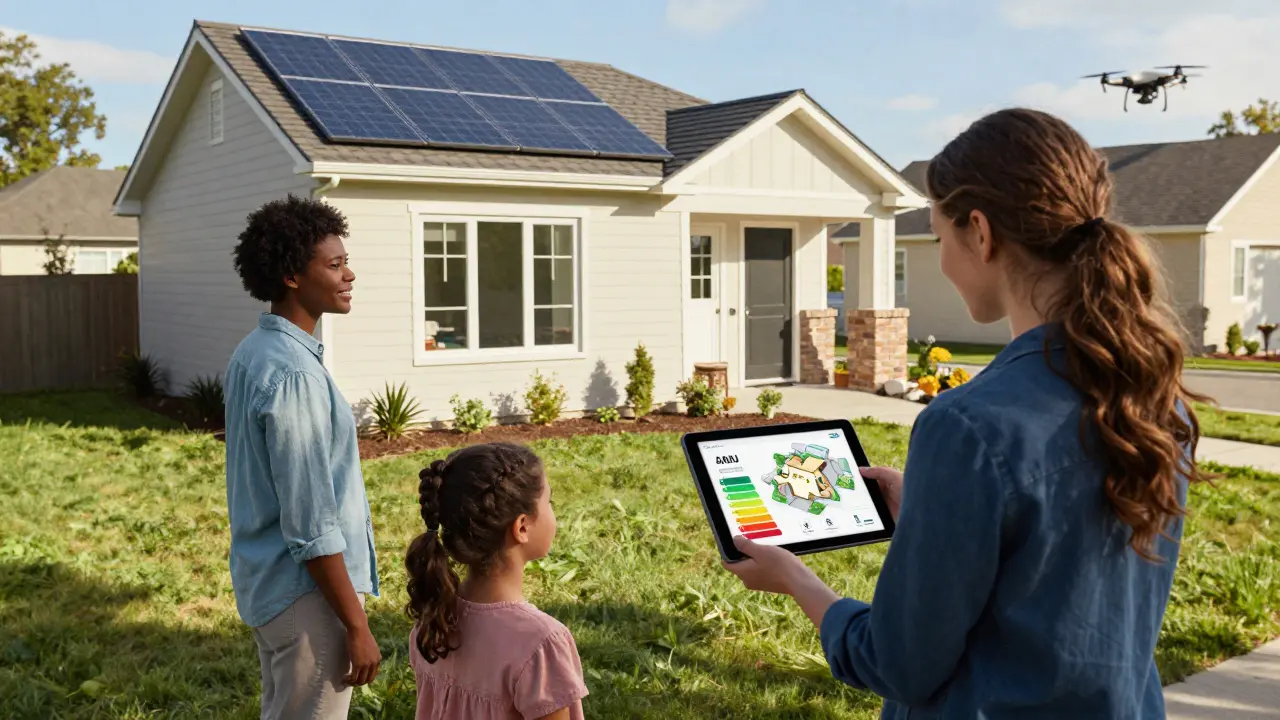
One Austin-based firm recently used AI to identify that homes with solar panels and low water usage sold 22% faster in North Austin. They started highlighting those features in every listing. Sales went up.
When Should You Avoid a Real Estate Firm?
There are times when going solo makes sense:
- You’re selling a unique property (like a historic home or land parcel) and know the local buyers personally.
- You’re buying a new construction home directly from the builder-many builders have their own agents.
- You’re doing a cash purchase with no financing and want to skip commissions.
But even then, you might still benefit from a firm’s legal or inspection network. Most people who skip firms end up paying more in mistakes than they save in fees.
Final Thought: It’s Not About the Firm-It’s About the Team
The name on the sign doesn’t matter as much as the person assigned to your deal. A big firm with a disengaged agent is worse than a small firm with a passionate one. Ask for their recent transaction history. Ask how many clients they’ve helped in the last year. Ask if they’ll personally handle your closing or hand it off to someone else.
A real estate firm is only as good as the people inside it. Choose wisely.
What’s the difference between a real estate firm and a brokerage?
In most cases, they’re the same thing. A brokerage is the legal entity that holds the agents’ licenses. A firm is the business name you see on the sign. Most brokerages operate as firms, and most firms are brokerages. The terms are used interchangeably in everyday language.
Can I work with multiple real estate firms at once?
Yes, but it’s not recommended. If you sign a buyer’s agreement with one firm, you’re usually locked into working only with them for a set period (often 30-90 days). Trying to work with multiple firms can create conflicts of interest and slow down your search. Pick one firm you trust and stick with them.
Do real estate firms charge upfront fees?
Most don’t. The standard model is commission-only-you pay nothing until the deal closes. But some discount firms or flat-fee listing services charge a small upfront fee just to list your home on MLS. Always ask: "Is there any cost to me before the sale?" and get it in writing.
How do I know if a real estate firm is reputable?
Check their license status with your state’s real estate commission. Look for reviews on Google, Zillow, and Yelp from the last year. Ask for references from past clients. Avoid firms with dozens of complaints about hidden fees, poor communication, or unlicensed agents.
Are real estate firms still relevant with Zillow and Redfin?
Yes. Platforms like Zillow and Redfin are listing tools, not full-service firms. They help you find homes, but they don’t negotiate offers, handle inspections, or guide you through closing. Most buyers and sellers still use a licensed agent from a firm to avoid legal mistakes and get personalized advice.
8 Responses
Okay so I just sold my first house last month and let me tell you-this whole real estate firm thing is either a lifesaver or a nightmare. I went with this big name firm because their ads were everywhere, and guess what? My agent was out of town for two weeks during the closing and I was left texting a robot that said ‘I’ll get back to you’ 17 times. Meanwhile, my cat was sitting on the signed paperwork and I had to scramble to get a notary at 10 PM. Don’t get me wrong, the photos looked nice, but if your firm can’t keep one human being available, what’s the point? I’m never using a big firm again. I’m going solo next time-even if I have to learn how to use MLS myself.
LOL at the ‘AI predicts homes sell faster if they have solar panels’-sounds like someone’s marketing deck got too much caffeine. 🤓 But honestly? I’m not mad. If your firm uses AI to stop wasting my time on listings that are 5 miles too far from the school district, then yes, I’ll take the robot over the guy who still uses paper maps. Also, blockchain contracts? That’s the future, baby. 🚀 Who else is tired of printing, signing, scanning, and mailing stuff like it’s 2008? Let’s go digital or go home.
What if… the entire real estate firm model is just capitalism’s way of making us pay for the illusion of security? 🤔 We’re told we need a ‘team’ to sell a house, but what if the house just… sold itself? What if the market doesn’t need middlemen? What if we’re all just actors in a system designed to extract value from our most vulnerable asset-our homes? I’m not saying don’t use a firm. I’m saying… ask yourself why you feel so scared without one.
Bro, I used a firm last year and my agent was a 22-year-old who didn’t know what a FHA loan was. The firm had 500 agents and zero accountability. They sent me a PDF titled ‘Welcome to Your Home Journey!’ like I was joining a yoga retreat. Meanwhile, the guy who actually showed me the house was a guy named Dave who drove a Prius and had a tattoo of a house on his forearm. He knew every backyard in the neighborhood. The firm? Zero. Dave? 10/10. Don’t buy the brand. Buy the person. Always.
Yeh, real estate firms are just the new Wall Street-except instead of stocks, they trade human shelter. The AI pricing tools? They’re trained on biased datasets that favor gentrified neighborhoods. The blockchain contracts? Just another way to lock you into opaque legal frameworks designed by corporate lawyers who’ve never stepped foot in a living room. And don’t get me started on how Zillow’s algorithm erases low-income communities from ‘market trends.’ This isn’t innovation. It’s surveillance capitalism with a shiny logo.
I just want to say thank you to the agent who stayed up till 2 AM answering my 47 questions about whether the basement was waterproofed. That’s the kind of person you want behind you. Not the firm’s name on the sign. Not the drone footage. Not the AI. Just someone who cares enough to answer your weird questions. I cried when we closed. Not because of the money. Because someone treated me like a human, not a transaction.
Wait so if I use a flat-fee firm, does that mean I have to do my own open house? Like… invite people over and make cookies? 😅 I’m not great at hosting. But also, I kinda want to? Like, maybe I should just list it myself and see what happens? I’m scared but also curious. Does anyone else feel like the whole system is trying to make you feel like you need help just to sell your house? I mean… I’ve lived here 12 years. I know the leaky faucet better than any inspector.
Great breakdown. 🙌 One thing I’d add: always ask if the agent is a licensed broker or just an agent. In many states, only brokers can sign contracts or supervise transactions. Some firms let junior agents handle everything-then disappear when things go wrong. Also, check their NAR membership. It’s not just a badge-it means they’re bound by a code of ethics. Don’t skip this. Your future self will thank you. 🏡