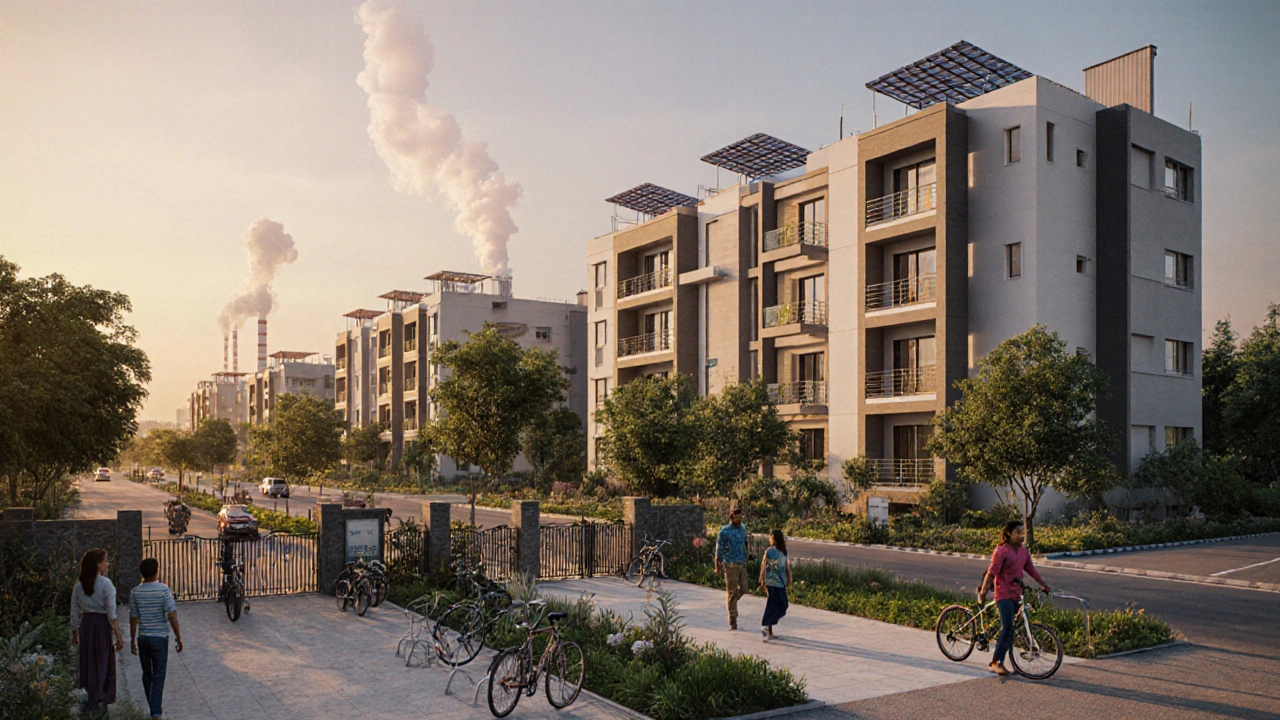
Asansol isn’t just a coal town anymore. Over the last five years, it’s transformed into one of West Bengal’s fastest-growing urban centers for residential and commercial real estate. With new highways, expanding industrial zones, and a rising middle class, demand for well-built homes and office spaces has surged. But not all developers deliver. If you’re looking to buy, invest, or even partner with a builder in Asansol, knowing who’s actually delivering quality projects matters more than ever.
Why Asansol’s real estate market is heating up
Asansol’s population has grown by nearly 18% since 2020, according to West Bengal’s urban development department. That’s not just because of migration-it’s because people who left for Kolkata or Durgapur are now coming back. Why? Because Asansol offers lower land prices, better road connectivity via NH-19 and the Asansol-Dhanbad Expressway, and new schools and hospitals are being built faster than in many Tier-2 cities.
The real estate boom isn’t random. It’s tied to industrial growth. Companies like Tata Steel, Jindal Steel, and Adani Power have expanded their operations here. That means more employees needing homes. And with the upcoming Asansol Smart City project, the government is allocating ₹450 crore for housing, water supply, and green spaces. Developers who are aligned with this plan are the ones winning contracts and buyer trust.
Who are the top real estate development companies in Asansol?
Not every builder with a signboard is worth your money. Here are the five companies consistently delivering projects on time, with clear documentation and decent after-sales service.
- Shree Ram Developers - Started in 2012, they built the first gated community in Asansol’s Kulti area: Surya Heights. Over 800 units sold since 2018. Their projects include 2BHK and 3BHK flats with modular kitchens, 24/7 security, and rainwater harvesting. Buyers report 92% on-time delivery.
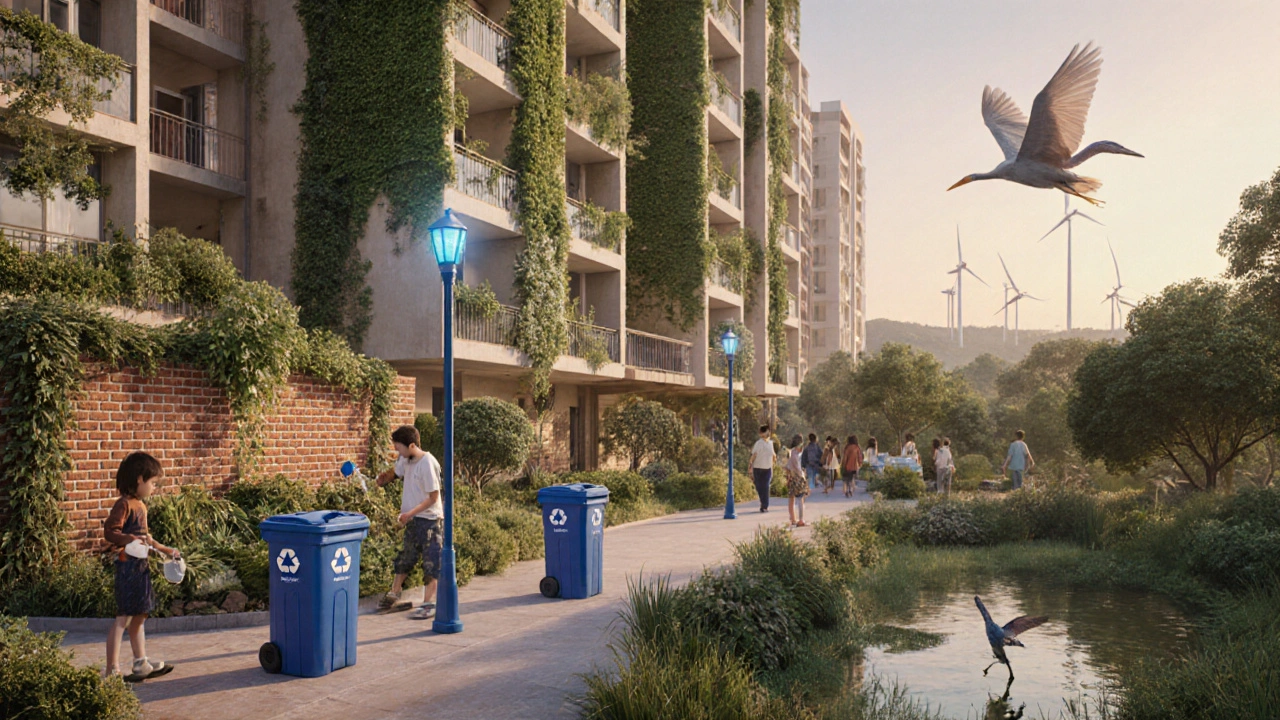
- Greenwood Group - Focused on eco-friendly housing. Their project Green Valley Residency uses solar-powered lighting, recycled bricks, and vertical gardens. They’ve partnered with the Asansol Municipal Corporation for waste management in their colonies. Not the cheapest, but if you care about sustainability, they’re the only ones doing it here.
- Asansol Homes Pvt. Ltd. - A local name with deep roots. They’ve built over 1,200 homes since 2008. Their strength? Affordable 1BHK and 2BHK units near railway stations and bus stops. Their City View Apartments in Raniganj sold out in 11 days in early 2024. No fancy amenities, but solid construction and clear RERA registration.
- Shivam Constructions - Specializes in commercial spaces. They developed the Asansol Business Park, a 3-floor office complex with 45 units leased to IT startups and banks. Their clients include Axis Bank and TCS. They’re the go-to for investors looking for rental yields above 8% annually.
- Urban Space Developers - The most aggressive marketer. They launched Urban Nest, a luxury project with a rooftop pool, gym, and concierge service. Prices start at ₹45 lakh. Their sales team is responsive, but some buyers complain about delays in possession. Still, their design quality is unmatched in the city.
What to look for before buying from any developer
Buying property in Asansol isn’t like buying a phone. You can’t return it. Here’s what actually matters:
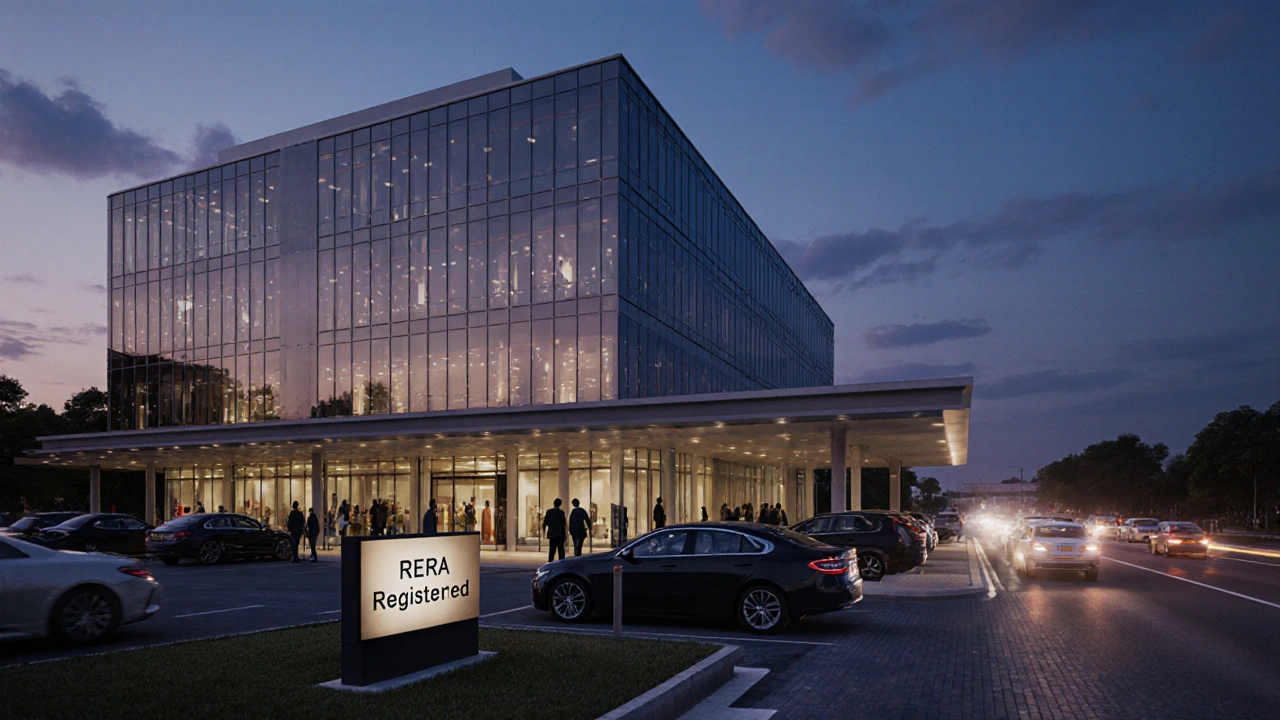
- Check RERA registration - Every project must be registered under the Real Estate (Regulation and Development) Act, 2016. Go to rera.wb.gov.in and search by project name. If it’s not listed, walk away.
- Ask for the occupancy certificate - Some developers hand over keys before getting this. That’s illegal. No OC = no water connection, no electricity meter, no insurance.
- Visit ongoing sites - Don’t just look at the model flat. Go to the construction site. Check the quality of concrete, the alignment of walls, and whether workers are using proper safety gear. If the site looks messy, the finished product will be too.
- Read reviews from past buyers - Facebook groups like “Asansol Property Buyers Network” have hundreds of real posts. Look for patterns: Are people complaining about water leakage? Delayed handover? Poor maintenance?
- Understand the total cost - The quoted price often excludes GST, maintenance deposits, parking charges, and registration fees. Add 12-15% on top. Ask for a written breakdown.
Where are the best locations for real estate in Asansol?
Location makes or breaks your investment. Here’s the current ranking based on appreciation, infrastructure, and demand:
- Kulti - Best for families. Good schools, hospitals, and parks. Property prices have risen 22% since 2022.
- Raniganj - Highest rental demand. Close to railway lines and industrial zones. 2BHK flats rent for ₹8,000-₹12,000/month.
- Barakar - Emerging hotspot. New metro extension planned. Land prices are still low, but expected to double in 3-4 years.
- Chittaranjan - Quiet, green, and safe. Popular with retirees and remote workers. Fewer projects, but higher quality.
- Asansol City Center - For commercial buyers. Office spaces here are 30% more expensive than in Kulti, but have 95% occupancy.
Common mistakes buyers make in Asansol
People lose money here not because prices are high-but because they skip basic checks.
One buyer invested ₹38 lakh in a project called Golden Horizon because the developer promised a “free car parking.” Turned out the parking was just a marked concrete patch with no cover. No legal rights. No refund.
Another bought a flat in a project that claimed to be “RERA-registered,” but the registration was for a different plot. The builder had reused the same RERA number across three fake projects. The buyer only found out after the bank rejected the loan.
Don’t fall for flashy brochures. Ask for the RERA number. Ask for the layout plan. Ask for the name of the structural engineer. If they hesitate, they’re hiding something.
Is now a good time to invest in Asansol real estate?
Yes-if you’re buying for the long term. Prices are still 40% lower than in Kolkata. Rental yields are 6-9%, which beats most mutual funds. And with the government pushing infrastructure, the next 5 years will see steady growth.
But don’t expect quick flips. The market isn’t speculative yet. Buyers here stay for 5+ years. If you need liquidity in 2 years, look elsewhere.
For investors: Focus on 2BHK flats in Raniganj or Kulti. For families: Look at Green Valley or Surya Heights. For businesses: Asansol Business Park is the only proven option.
What’s next for Asansol’s real estate scene?
The Asansol-Durgapur Industrial Corridor will be fully operational by 2027. That means more jobs, more migrants, and more demand for housing. New educational institutions like the Indian Institute of Engineering Science and Technology (IIEST) are expanding their campuses here. That’s going to drive student housing demand.
Expect more green-certified projects. More integrated townships with schools, clinics, and retail built in. And more transparency-thanks to RERA and social media. Developers who don’t adapt will disappear.
If you’re ready to buy or invest, start with the five companies listed here. Visit their sites. Talk to actual residents. Don’t rush. Asansol’s real estate boom is real-but only the smart buyers will benefit from it.
How do I verify if a real estate developer in Asansol is legitimate?
Go to the official West Bengal RERA portal (rera.wb.gov.in) and search for the developer’s name or project. Legitimate developers display their RERA registration number on their website, brochures, and sales offices. If you can’t find it online or they refuse to show it, avoid them. Also, check for past projects on Google Maps and visit them in person to see construction quality and resident satisfaction.
Which area in Asansol has the highest property appreciation rate?
Kulti has seen the highest appreciation over the last three years, with property prices rising by 22% since 2022. This is due to its proximity to schools, hospitals, and the new Asansol Smart City infrastructure. Barakar is catching up fast-its prices are expected to jump 30-40% once the metro extension is completed by 2027.
Are there any affordable housing options in Asansol under ₹25 lakh?
Yes. Asansol Homes Pvt. Ltd. offers 1BHK and 2BHK units in Raniganj starting at ₹22 lakh. These are basic but functional, with RERA registration, proper water and power connections, and no hidden charges. Avoid projects that promise luxury features at ultra-low prices-they often skip legal clearances or use low-grade materials.
Can foreigners buy property in Asansol?
Foreign nationals cannot buy residential property in India unless they are PIOs (Persons of Indian Origin) or OCIs (Overseas Citizens of India). NRIs can buy, but only one residential property. They must use funds transferred through banking channels and report the purchase to the Reserve Bank of India. Always consult a local property lawyer before proceeding.
What’s the average rental yield in Asansol?
Rental yields in Asansol range between 6% and 9% annually, depending on location and property type. A 2BHK flat in Raniganj rents for ₹8,000-₹12,000 per month, while a similar unit in Kulti rents for ₹10,000-₹14,000. Commercial spaces in the city center can yield up to 10% due to high occupancy rates.
16 Responses
Asansol’s growth is actually impressive. I’ve been tracking this for a while, and the shift from coal town to urban hub is real. The RERA checks they mentioned? Non-negotiable. Saw a friend get burned in Bhopal because they skipped that. Don’t be that guy.
Greenwood Group? Yeah, they make your flat look like a Pinterest board while charging triple. Meanwhile, Asansol Homes is quietly building 1,200 homes and actually delivering. The market doesn’t need eco-chic. It needs roofs that don’t leak.
The real estate boom here isn’t about luxury it’s about necessity. People are returning because they can afford to live here and still send money home. That’s the quiet truth behind the numbers. No glitter needed.
Ugh. Urban Space Developers? That’s the same company that got sued last year for using substandard rebar in Surya Heights? And now they’re pushing a rooftop pool? Please. I’ve seen their construction sites - the workers are using gloves from 2018. This isn’t real estate, it’s a scam with a brochure.
And don’t even get me started on the ‘RERA-registered’ lies. I know a guy whose entire life savings vanished because the registration number was recycled from a project that got demolished in 2021. The government’s portal? Useless. It’s not updated. It’s a joke.
And don’t tell me to ‘visit the site.’ Half the sites are just fenced-off mud with a signboard and a guy selling chai. The ‘model flat’? A stage set. The actual unit? A shoebox with a leaking tap and no ventilation.
And don’t even mention ‘affordable housing’ - those ₹22 lakh flats? They’re built on land that’s still under litigation. The builder’s lawyer is also his cousin. The RERA number? Fake. I’ve checked. I’ve filed complaints. No one cares.
And don’t even think about investing in Barakar. The metro extension? It’s been ‘planned’ since 2017. It’s a political prop. The only thing growing there is the number of abandoned projects.
Asansol isn’t booming. It’s being looted. And the people writing these ‘top developers’ lists? They’re on commission. I’ve seen the emails. I’ve seen the contracts. This isn’t a guide. It’s a sales pitch dressed as journalism.
Buyers aren’t stupid. They’re desperate. And that’s what they’re exploiting.
RERA check. Site visit. Walk away if they hesitate. Done.
There’s something poetic about Asansol’s transformation - from smokestacks to smart cities. The same earth that once fed the furnaces now feeds homes. The people who built the trains now live in them. It’s not just real estate. It’s redemption.
But the real winners? The ones who bought in Raniganj in 2020. They didn’t chase glitz. They chased access. Proximity to work. Proximity to school. Proximity to sanity.
And the developers who survived? They didn’t sell dreams. They sold durability. Concrete that didn’t crack. Pipes that didn’t rust. Papers that didn’t vanish.
Asansol isn’t becoming Kolkata. It’s becoming itself. And that’s rare.
Investors must prioritize due diligence above all else. The Real Estate (Regulation and Development) Act, 2016, mandates full transparency, and failure to comply constitutes a statutory violation under Section 3. All projects must be registered on the official RERA portal with verifiable documentation. Furthermore, occupancy certificates issued by municipal authorities are legally binding prerequisites for habitation. Any deviation from these norms exposes buyers to significant financial and legal risk. It is imperative to consult a certified property lawyer before executing any transaction. The integrity of the investment hinges on compliance, not speculation.
Let’s be honest - if you’re buying in Asansol, you’re not investing. You’re participating in a low-tier, low-liquidity, low-prestige asset class. The only people who benefit are the developers who’ve mastered the art of RERA arbitrage. And the ‘green’ projects? Please. Vertical gardens on a 12-floor slab in a city where the monsoon turns roads into rivers? It’s performative sustainability. Aesthetic theater for the urban bourgeoisie who think they’re saving the planet while their AC unit guzzles power.
And don’t even get me started on the ‘affordable’ 1BHKs. They’re 200 sq ft with a kitchen that’s just a corner and a sink. ‘Functional’? No. It’s a glorified dormitory with a RERA sticker. You’re not buying a home. You’re buying a tax write-off with a view of a construction site.
Meanwhile, the city center? 95% occupancy? Sure. Because every office is a call center staffed by 22-year-olds earning ₹18k. That’s not economic growth. That’s demographic desperation.
Asansol isn’t a boom. It’s a Band-Aid on a hemorrhage. And everyone here is pretending it’s a spa.
Correction: The Asansol-Dhanbad Expressway is NH-19, not a separate highway. Also, RERA registration is mandatory under Section 3 of the RERA Act, 2016 - not optional. And ‘modular kitchens’ aren’t a selling point - they’re standard in any post-2020 project. You’re overhyping trivial features while underemphasizing structural integrity. And please, stop calling it ‘smart city’ - it’s a marketing term, not a legal designation. The actual Smart City Mission projects are still in tender stage. Don’t mislead readers.
You know what Asansol really needs? Not more flats. Not more offices. Not more RERA numbers. It needs a soul.
Behind every 2BHK is a man who left Kolkata because he couldn’t breathe. Behind every ‘affordable’ unit is a woman who works three jobs to pay the maintenance. This isn’t real estate. It’s survival with a brochure.
I walked through Surya Heights last week. Saw a grandfather sitting on the balcony, staring at the same tree he planted in 1992. He didn’t care about the rainwater harvesting. He cared that the wall didn’t crack during the last monsoon.
That’s the truth. Not the rooftop pools. Not the solar panels. Not the ‘luxury’ labels.
The real estate boom isn’t about money. It’s about dignity. And the developers who get that? They’re the only ones worth trusting.
Really glad someone laid this out clearly. I’m helping my cousin buy his first flat in Raniganj and this is gold. Just visited Greenwood’s site - the solar lights are actually working, and the maintenance team showed up within an hour when we had an issue. Not every developer is out to scam you. The good ones are quiet, consistent, and don’t need flashy ads. Stick with the ones who’ve been around and let the results speak.
Shivam Constructions for commercial? YES. I leased a 500 sq ft office there last year. TCS moved in next door. Rent went up 20% in 6 months. No drama. No delays. Just good bricks and a solid contract. If you want returns, skip the flats. Go commercial. Easy money.
Kulti is the move. Schools. Hospitals. Quiet. Done.
Wait. Did you notice how all these ‘top developers’ are listed without any independent audit reports? No third-party structural certifications? No environmental impact assessments? This feels like a curated list from a developer’s PR team. And the ‘RERA portal’? It’s a joke. I checked three projects - two had mismatched plot numbers. One had a registration that expired in 2022. The government isn’t protecting buyers. It’s protecting the system.
And who wrote this? Someone who’s never stepped foot in Asansol. The ‘city center’ occupancy rate? 95%? That’s because the tenants are government offices. No private company would pay that rent unless forced. This isn’t a guide. It’s propaganda.
There’s a quiet rhythm to Asansol’s growth - not loud like Mumbai, not flashy like Bangalore. It’s the kind of growth that doesn’t make headlines but changes lives. A father buys a flat so his daughter can go to school without a two-hour commute. A couple saves for years to get a balcony where they can drink chai in the morning. This isn’t speculation. It’s belonging.
The developers who succeed aren’t the ones with the best ads. They’re the ones who show up when the rain leaks. Who answer the call at 10 PM. Who don’t disappear after handing over the keys.
Asansol isn’t becoming a city. It’s becoming a home.
Thank you for highlighting the legal framework. To add: Under Section 19 of RERA, buyers have the right to claim compensation for delays exceeding the agreed timeline. Developers must also provide a completion certificate issued by a licensed structural engineer - not just an occupancy certificate. Always demand both. Additionally, maintenance deposits must be held in an escrow account, not a personal account. Verify this with the bank’s statement. Many buyers overlook this, and it leads to disputes later.